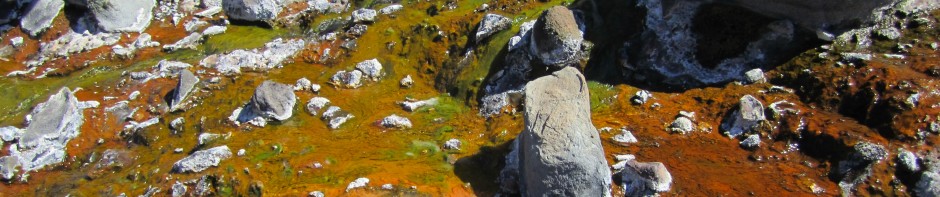
Ahjoomah, or Achoma, is the Madesi word for “river,” and is the original name of the (later renamed by colonialist invaders) “Pit River”. It is a remarkable “freestone river”, with an incredible diverse abundance of varied geology, plants, animals, and all kinds of fascinating organisms, large and small. The Pit River Ahjoomah is the longest and largest tributary to the Sacramento River, and provides about 80% of the summer water flows to what is now the huge reservoir known as Shasta Lake. In other words, before Shasta Dam was built, the Pit River Ahjoomah was part of the Sacramento River (and it was/is both the longest most biologically diverse river system in Californaia, and thus the longest/largest river on the West Coast of USA! **It is one of only three rivers that cross the Cascade Range and drain into the Pacific Ocean (the other two are the Klamath and the Columbia).
Context: The History of Ahjoomah & Pit River
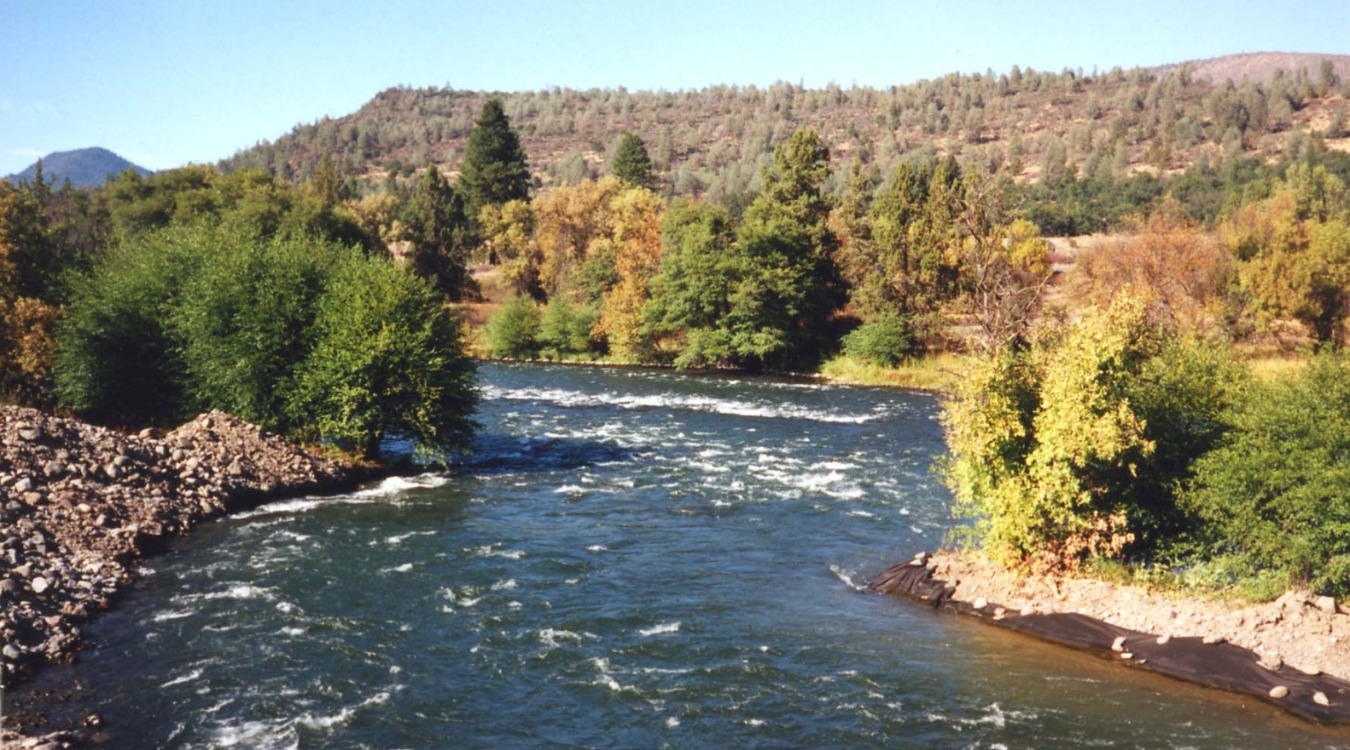
The Pit River Ahjoomah is very special in many ways. Since time immemorial, the Madesi Tribe (of Big Bend) and their Ancestors and neighboring bands lived, worked, loved, hunted, gathered acorns, struggled, evolved, and thrived along the river Ahjoomah for countless generations. Then, in the starting in the mid-nineteenth century the Madesi suddenly found themselves facing horror danger, and even demise at the hands of hoards of disease-carrying genocidal thieves, many of whom were violent racist heartless, cruel, and greedy, uneducated white men. The Europeans brought invasive diseases and plenty of entitled hatred and aggression into Madesi territory, along with powerful weaponry and military forces. Of course, this horrific situation was happening without any regard or compassion, or enforcement for the rule of law or common decency… and it was/is happening all over the Americas, but especially in California in the 1800s.
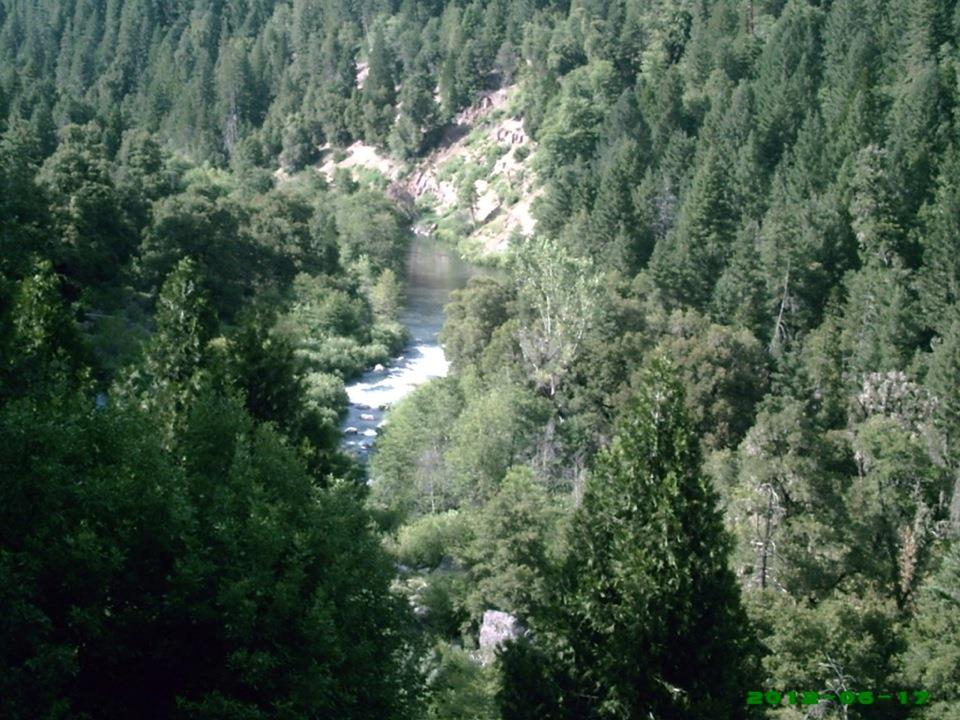
The cultural destruction, violence, disease, and land theft (to say the least) left the scattered reality that evil forces had arrived, with the existential predicament of their arsenal of demonic fierce cruelty, entitlement and weaponry, that the Madesi had never experienced before. so, The Madesi faced countless difficulties, including: difficult interfacing with invaders, death, devastation, starvation, land theft, disease, and dispersement.) This was based in and caused by the inhumane lust and the ruthless demonic will to thrive at the expense of others, and ended up to amounting to defacto genocide for California natives (and countless other tribes in the Americas…)
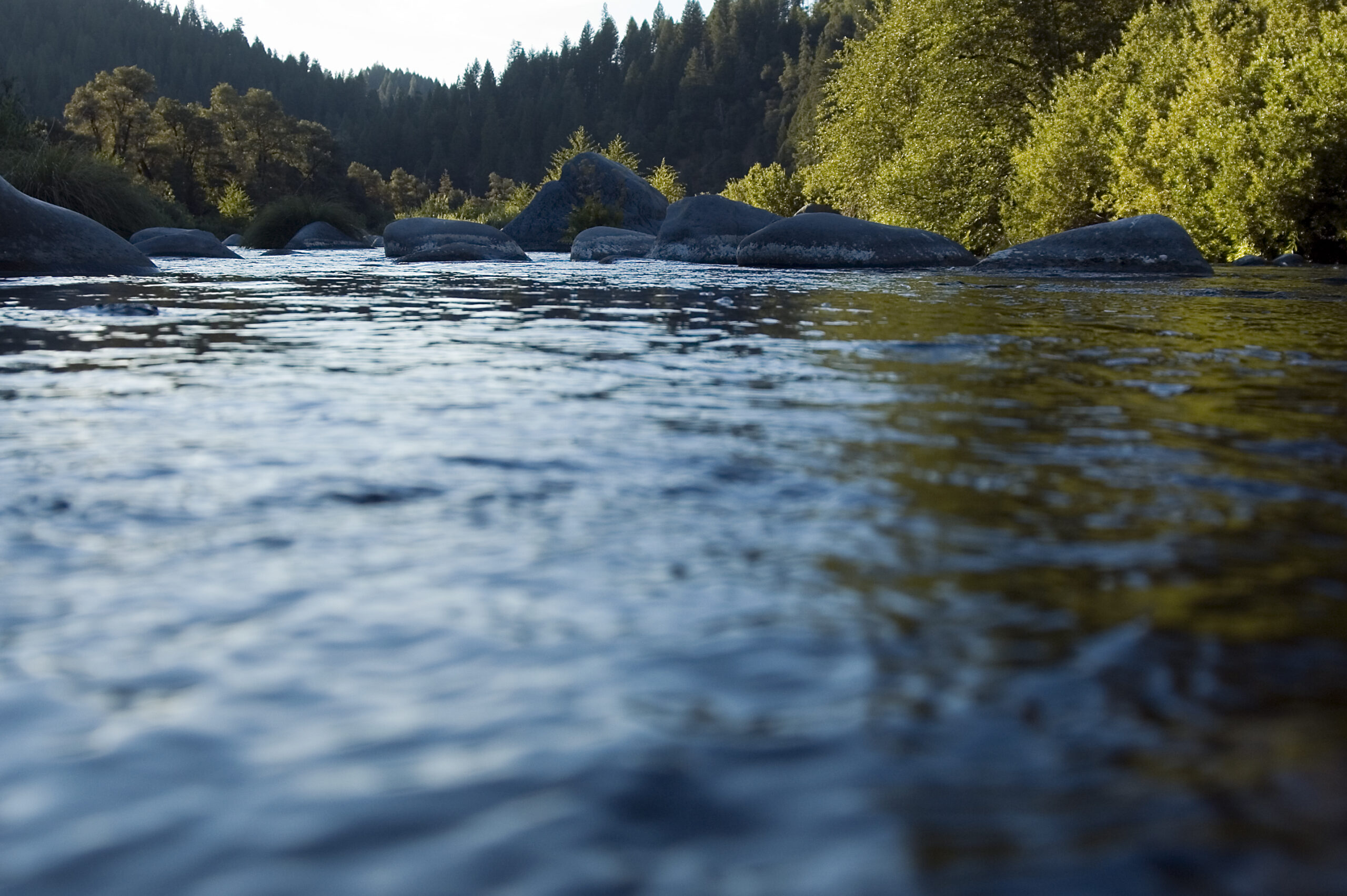
The harsh invasion of white Europeans (an occasionally others) into the Madesi Valley in the mid 19th century the (1840s – 1870s)ish until more recent times, included plenty of settler invaders with their hateful heartless unethical entitled violent attitudes and weapons, intolerance, and lots of diseases, until ll along the banks of the Pit River Ahjoomah in Big Bend, the community sits on one of the greatest wild freestone rivers of the PNW and California — an entrancing and powerful river shaped by volcanic geology, dramatic seasonal hydrology, amazing wildlife and diverse plants in various micro-climates…
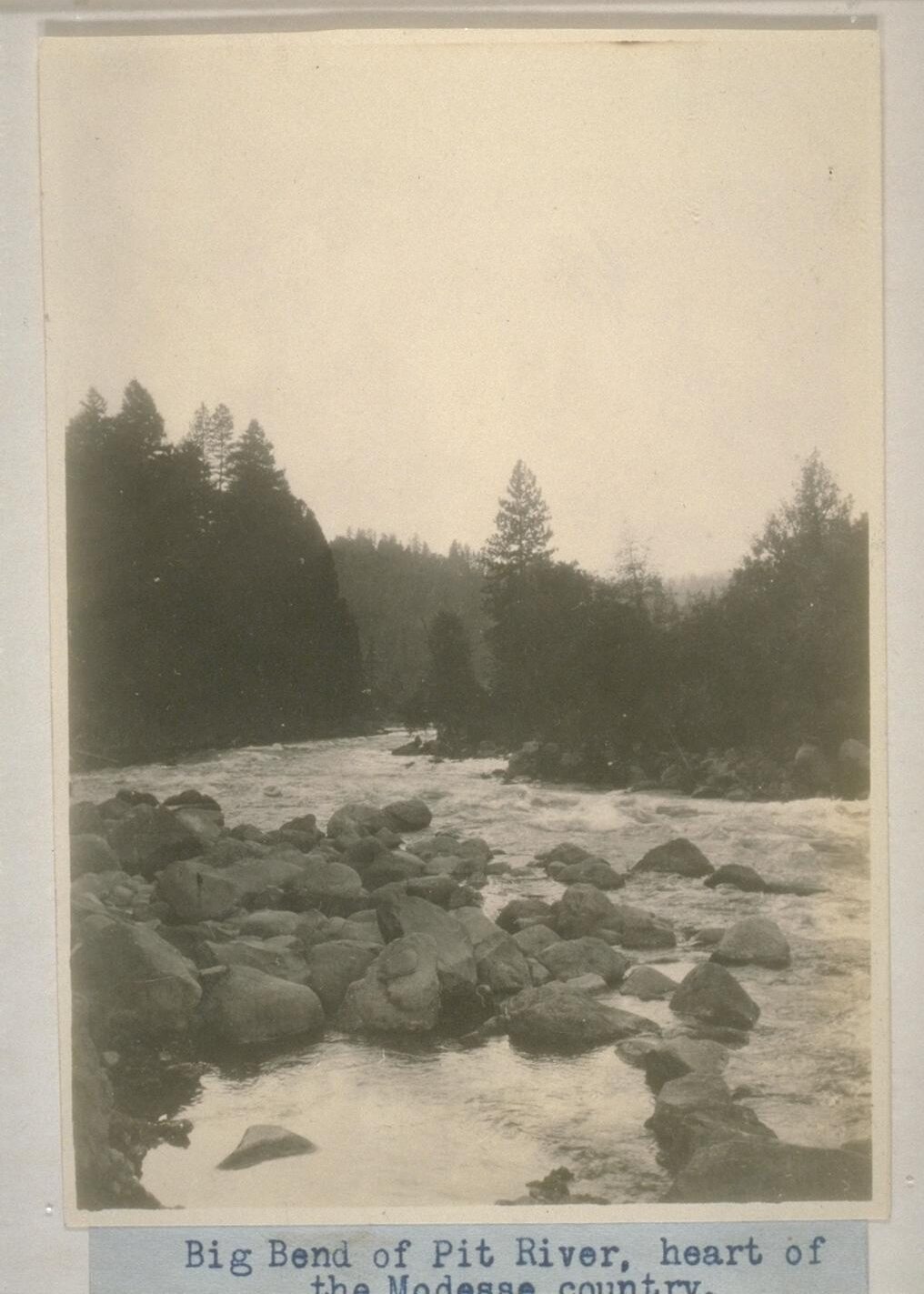
A long human history going back to the ancient Pit River Tribes (Ajumawi-Atsuge speaking bands) who called the river Ahjoomah and whose identity is inseparable from it. The loose, tumbled volcanic cobble stoned that are seen so commonly everywhere in the riverbed are the literal physical expression of its freestone character — stones that have been tumbled, sorted, and set free by thousands of years of floods and flows through that spectacular canyon.
What Is a Freestone River?
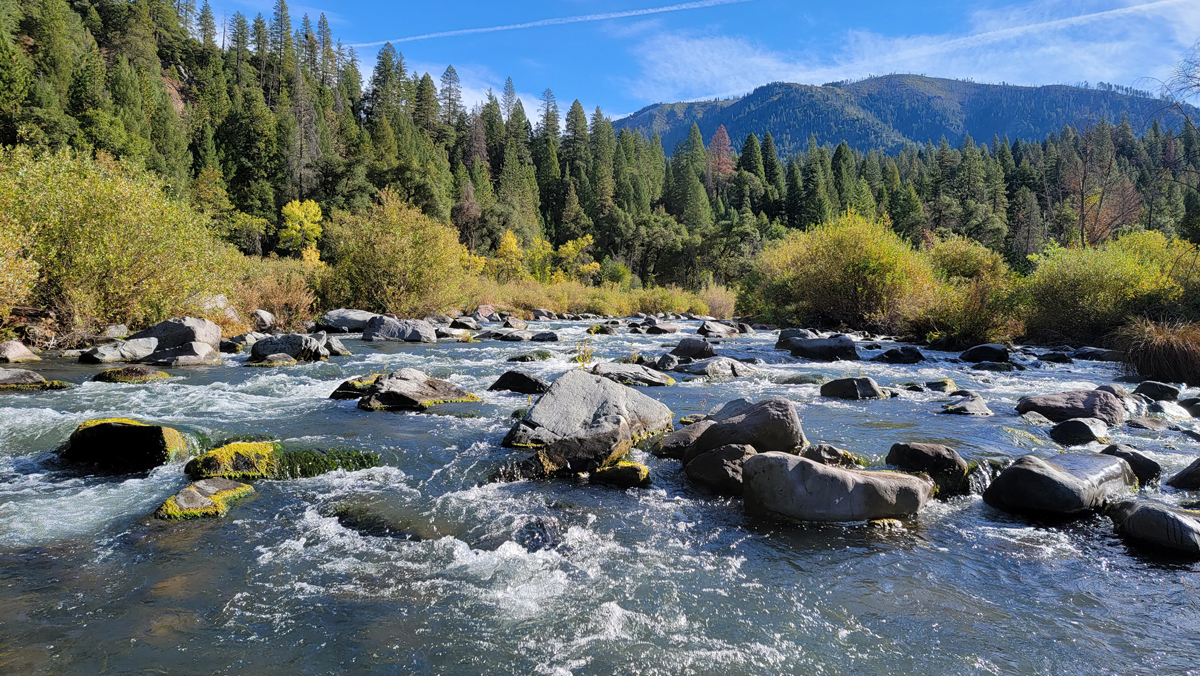
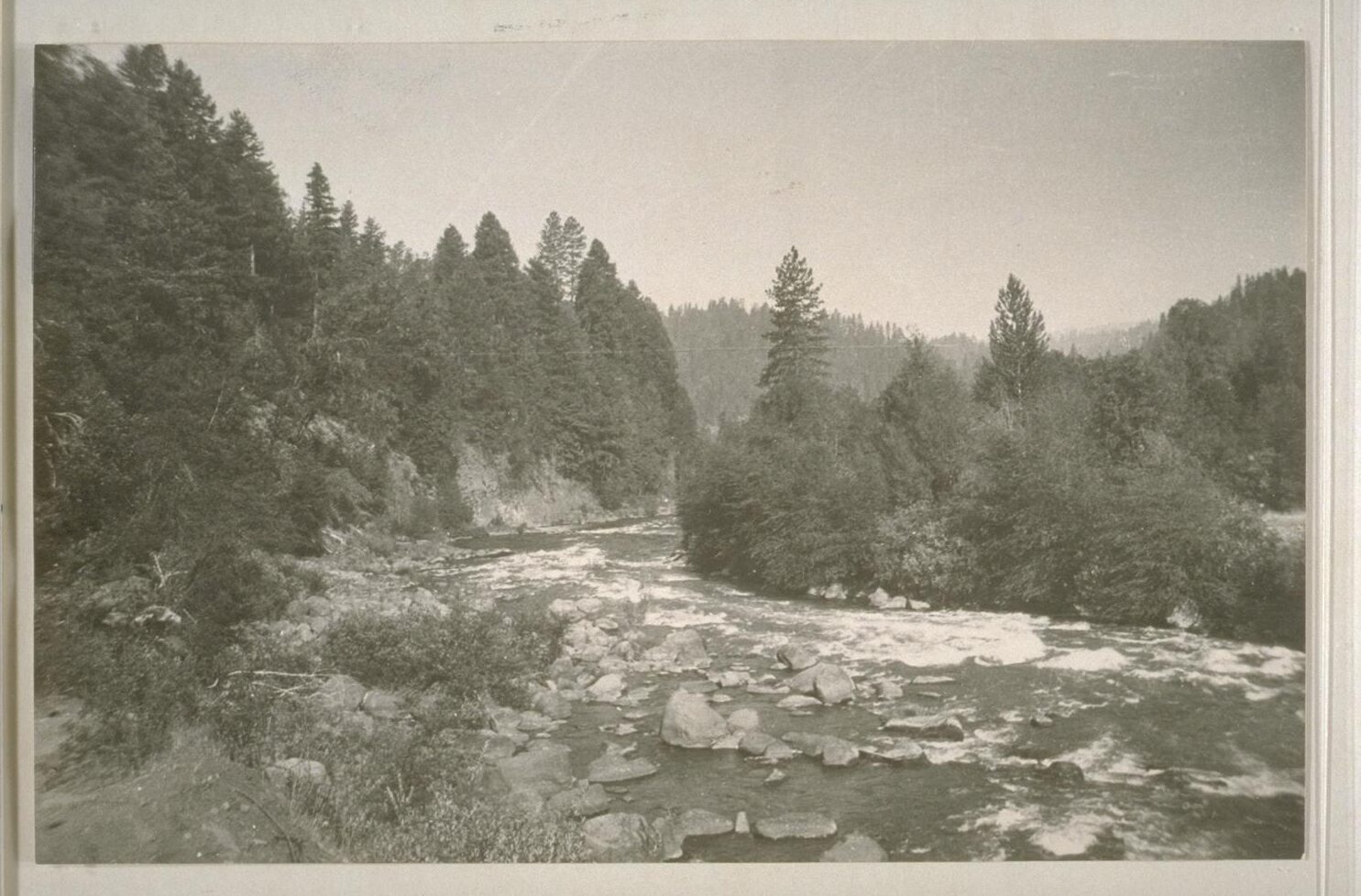
A freestone river is named because its rocks and stones are free — meaning loose, unattached, and able to move. The stones are free of the cemented, calcium-encrusted, sticky coating that characterizes the other major river type, called a limestone river (also called a spring creek). So it’s the stones that are free, not the river being free of stones. Similar to the 1966 Jimi Hendrix song, “Stone Free” (“to do what I please”)- Even though the river stones are free to move about, they are mostly at the mercy of the dynamic, fluctuating, and ever-engaging Ahjoomah flows.
The Real Distinction: Water Chemistry, Not Rock Type
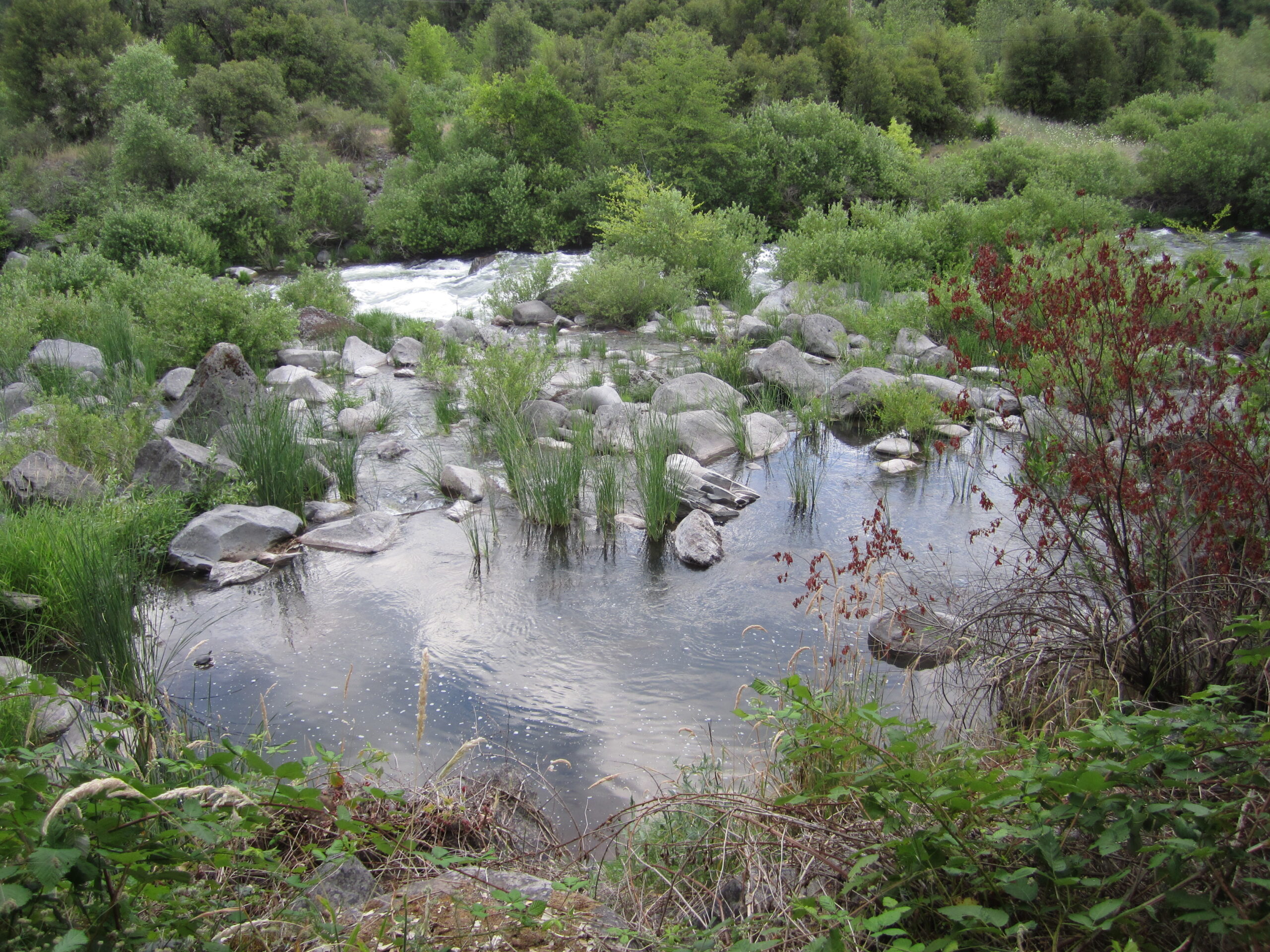
Here’s where it gets genuinely fascinating and counterintuitive. The freestone vs. limestone distinction is primarily about water chemistry, not about what kind of rocks are in the riverbed, even though the rock type drives the chemistry.
Freestone Rivers (like the Pit River Ahjoomah):
- Fed primarily by rain and snowmelt running directly off the land surface and through the soil
- Water is “soft” — low in dissolved minerals, especially calcium and magnesium carbonate
- Water has relatively low pH — slightly acidic to neutral (typically pH 6.5–7.5)
- Flow is highly variable — rises dramatically after rain or snowmelt, drops significantly in summer drought
- Water temperature fluctuates considerably with air temperature and season
- The streambed rocks are loose, tumbled, and mobile — moved around by floods and high flows
- Water tends to be clear but “thin” in terms of mineral nutrient content
Limestone/Spring Creek Rivers (the opposite type):
- Fed primarily by groundwater that has percolated slowly through calcium-rich limestone bedrock
- Water is “hard” — saturated with dissolved calcium carbonate (think of the white mineral deposits in your kettle or shower)
- Water has higher pH — alkaline (typically pH 7.5–8.5)
- Flow is remarkably constant year-round because groundwater aquifers buffer against rain and drought
- Water temperature is extremely stable — often the same temperature winter and summer, matching the groundwater temperature
- The streambed rocks become coated and cemented with calcium carbonate deposits — they are literally glued down and not “free”
- Water is extraordinarily fertile in nutrients, producing massive aquatic plant and insect life
The chemistry difference creates profoundly different ecosystems:
Freestone rivers like the Pit Ahjoomah tend to have:
- More dynamic, dramatic hydrology —like the Pit River, rises and falls dramatically
- Cobble and boulder substrates that shift in floods, creating constantly changing habitat
- Good but not exceptional insect diversity — primarily stoneflies, caddisflies, and mayflies that thrive in fast, oxygenated water
- Fish populations that are boom and bust — tracking the variable flows and temperatures
- The wild, dramatic character that makes rivers like the Pit so beautiful and exciting
Limestone spring creeks (famous examples include spring creeks in Montana’s Paradise Valley, or the chalk streams of England like the River Test) tend to have:
- Unbelievably dense aquatic insect hatches fed by the mineral-rich water
- Enormous quantities of aquatic vegetation (watercress, elodea) that wouldn’t thrive in mineral-poor freestone water
- Extraordinarily large, selective, difficult-to-catch trout that grow fat on the dense insect life
- Constant, clear, cold, predictable flows that make them almost like giant aquariums
- The rocks genuinely are cemented and coated — you can feel the difference walking in a limestone stream vs. a freestone stream
Is the Pit River Ahjoomah Truly a Freestone River?
Yes, genuinely and classically so — with one interesting asterisk.
The Pit Ahjoomah is a textbook freestone river in most respects:
- It drains a large volcanic watershed (the Modoc Plateau, Warner Mountains, and surrounding ranges) dominated by volcanic basalt and andesite — not calcium-rich limestone
- It is fed largely by snowmelt and rainfall runoff, creating the dramatic seasonal flow variability you experience living on it
- Its water is relatively soft and lower in dissolved minerals compared to spring-fed streams
- Its streambed is famously full of those loose, tumbled, free volcanic cobbles and boulders you see everywhere
- It runs fast, cold, and oxygenated in the canyon reaches — classic freestone character
The asterisk: The Pit Ahjoomah watershed has significant spring and groundwater contributions in places, particularly from the volcanic aquifers of the Modoc Plateau. This gives portions of the Pit somewhat more stable flows and slightly more mineral content than a pure rain-and-snowmelt freestone river — it’s sometimes described as a “modified freestone” or a freestone river with significant spring influence. This actually contributes to its exceptional trout fishery — it has some of the biological richness of a spring-influenced system combined with the dramatic freestone character.
How Common Are Freestone Rivers?
Freestone rivers are actually far more common worldwide than limestone/spring creek rivers. The vast majority of rivers and streams in the American West — the Sacramento, the Trinity, the Klamath, the Rogue, the upper Colorado, most Sierra Nevada streams — are freestone systems. True limestone spring creeks are relatively rare geographic jewels, which is why they are so prized by fly fishers and why access to them is often expensive and controlled.
In the eastern US and in England and Ireland, limestone geology is much more common, which is why the great classic trout streams of those regions — the chalk streams of Hampshire, the limestone creeks of Pennsylvania — have such legendary reputations for insect hatches and large fish.
~~~~~~~~~~~~~~~~~~~~~~~~~~~~~~~~~~~~~~~~~~~~~~~~~~~~~~~~~
A freestone river is a type of river with a significant gradient resulting in medium to fast-moving water. Rock, gravel, and sand characterize the riverbeds, with continual input from flood events, erosion, landslides, etc. The in-stream rocks eventually become eroded and reduced to free moving, smooth stones, gravel and sand, hence the term “freestone.” In fact, the bottom of a freestone river is in constant motion, altering the very structure of its banks and its course. Its flow characteristics and geomorphology are therefore in constant flux. The vast majority of the Pit River’s flow comes from precipitation and spring-fed tributaries, especially in the volcanic Cascade Range region. The fast moving water inhibits the growth of rooted vegetation resulting in a “freestone” bottom.
Hydroelectric dams built in the first half of the twentieth century have drastically changed the original flows and the biology of the mighty river. Below each dam, the majority of the river water is diverted, which once even left some sections nearly dry. After nearly 70 years of such unregulated and under-regulated ecosystem abuse, the electric company (PG&E) was recently forced to allow more water to pass through the dams, instead of being diverted to the powerhouses.
Flows on the Pit River increased significantly in 2011, reflecting the terms determined thru the 2003 FERC re-licensing process. The current dam permit requires minimum flows of 400 CFS (cubic feet per second) in the Big Bend “Pit 5 Reach” section of the river. This increase has resulted in less electricity generated, while improving the ecological health of the river and watershed. More information about the Pit River dams can be found on this web site, on the post called: “Damn! …Those Dams” (click to open the post in a new window).
The Eleven Autonomous Bands of
The Pit River Tribe
The tribe consists of nine Achomawi-speaking bands and two Atsugewi-speaking bands located in northeastern California:
- Ajumawi (Achomawi)
- Aporige (Aporidge)
- Astarawi (Astariwawi)
- Atsugewi (Atsuge)
- Atwamsini
- Hammawi (Hanhawi)
- Hewisedawi
- Ilmawi
- Itsatawi
- Kosalektawi (Kosalextawi)
- Madesi
Associated Tribal Lands and Communities: The federally recognized Pit River Tribe includes several small associated rancherias and reservations in the region:
•Big Bend Rancheria
•Likely Rancheria
•Lookout Rancheria
•Montgomery Creek Rancheria
ªRoaring Creek RancheriaXL Ranch Reservation (overlapping with Paiute)
~~~~~~~~~~~~~~~~~~~~~~~~~~~~~~~~~~~~~~~~~~~~~~~~~~~~~~~~~
Pit River Fishes and Mollusks
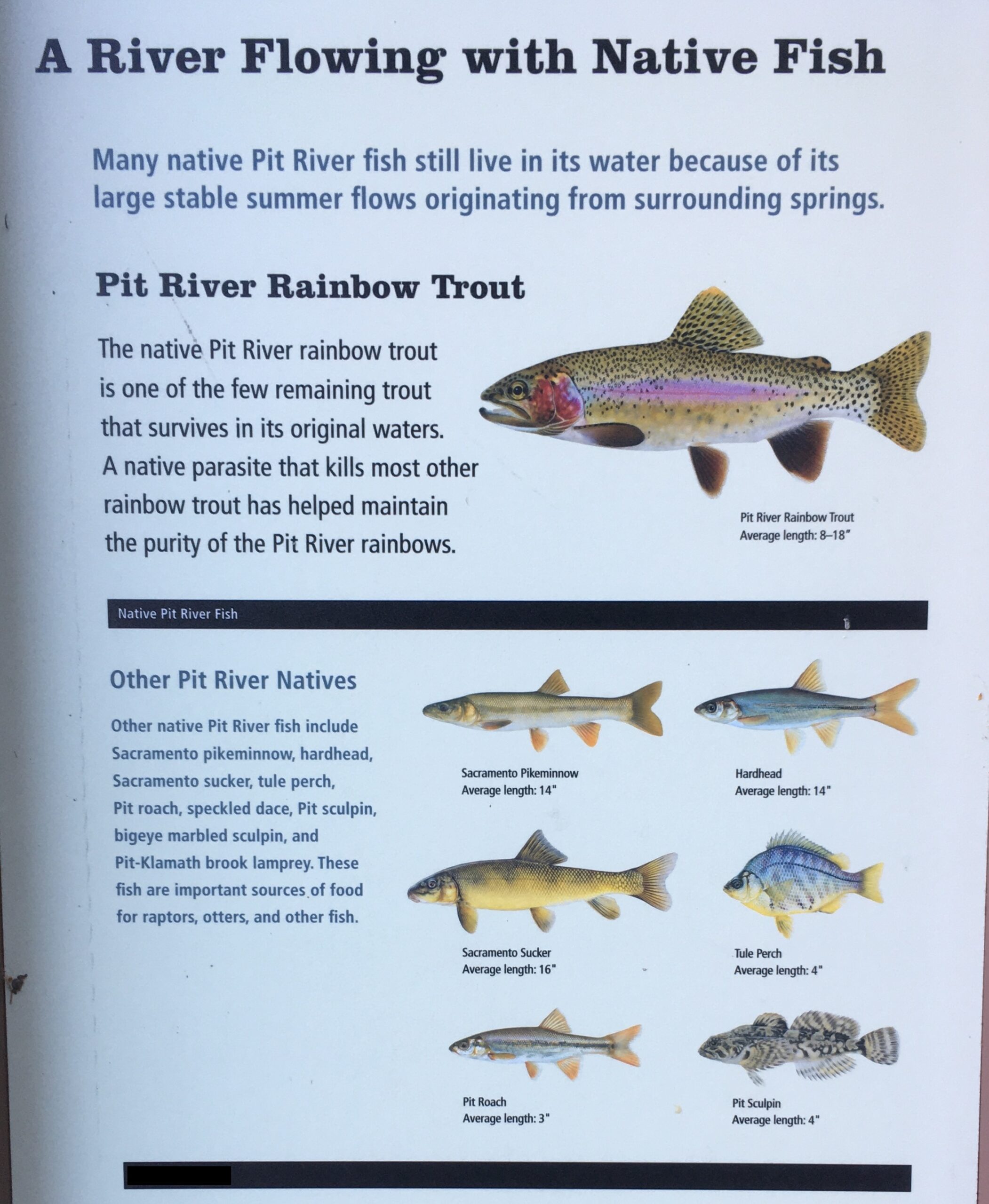
Below, are some of the fish, mussels, and snails of the mighty Ahjoomah in the Big Bend section, also known as the “Pit 5 Reach”. Unfortunately, the incredible (now listed as Endangered) anadromous Chinook Salmon no longer exist in the Pit River and its tributaries, due to the dams, but before 1942, Ahjoomah had one of the largest Salmon runs in the world. Unlike the “Biology” pages on this web site (on which all photos of various organisms were taken at the BBHS site), most of the fish and mollusk pictures on this page were not taken at BBHS.
1. Rainbow Trout (Oncorhynchus mykiss) NATIVE SPECIES
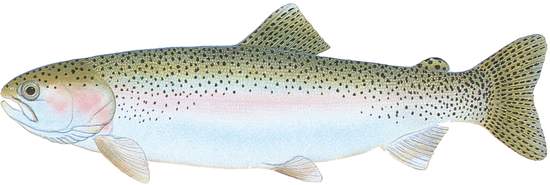
Rainbow Trout is a sustainable, low-mercury fish that’s labeled as a “best choice” by the USA EPA and FDA. This colorful patterned fish is a member of the salmon family and is one of the healthiest fishes you can include in your diet. Plus, it’s an excellent alternative to the often-overfished salmon.
- Commonly 35-65 cm FL and 1.4-5.4 kg
- Large mouth with teeth on both upper and lower jaws
- Silvery body, black spots on the adipose, dorsal, and caudal fins, pink to red lateral band
- Juvenile fish have similar appearance, possess 5-13 dark spots called parr marks that run laterally along fish’s body, parr marks are smaller than the gaps between them
- Young fish also have 5-10 dark dorsal spots between the head and dorsal fin.
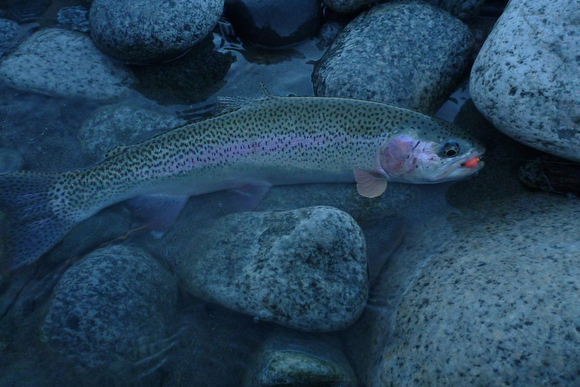
Rainbow Trout do not commonly live beyond 6 years, though fish have been recorded to reach 9-11 years. Within a stream resident rainbows have in-stream habitat preferences generally determined by size. The smallest fish are mostly found in riffles, medium sized fish in runs, and larger fish predominantly in pools. In streams and lakes rainbow trout feed on zooplankton, invertebrates, insects, drifting organisms, and sometimes other fish. Feeding usually peaks at dawn and dusk and summer consumption is greater than that in winter.
The ancestral origins of the rainbow trout in the Pit River remain unclear. These phenotypically unique trout are often referred to by the angling public as “Pit River rainbows,” implying a different strain than coastal rainbow trout. Our surveys confirmed that many of the rainbow trout observed exhibited bright coloration along the lateral line and on the opercula (pink to purplish band, some with faint parr marks retained into adulthood), yellowish ventral coloration and orange markings (cutthroat slashes) under the lower jaw. These phenotypic expressions are generally associated with redband trout.
Given the Ahjoomah Pit River’s historical and/or present hydrolological connection to both the Goose Lake Basin (and, therefore, potential downstream movement of Goose Lake redbands) and the Sacramento River (and therefore, coastal rainbow trout invasions from the lower end of the system), it is possible that the trout observed in the system today represent some intermediate between one or more forms of redband trout and coastal rainbow trout. However, no definitive genetic studies have been performed to clarify this issue. Further genetic sampling and analyses of the rainbow trout present throughout the Pit River system is recommended to elucidate the phylogenetic relationship(s) of rainbow trout in the Pit River to other trout forms in the greater Sacramento Fish Province. (From Pit River Summary Report July 2008 by Heritage and Wild Trout Program & California Department of Fish and Wildlife)
2. Sacramento Sucker (Catostomus occidentalis) NATIVE SPECIES
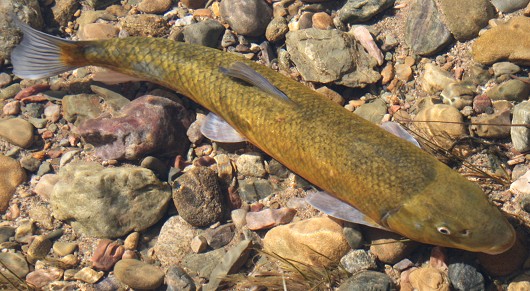
Sacramento Sucker Size: up to 56 cm
- Fleshy or “swollen” lips on sub terminal mouth
- Upper lip is covered in 4-6 rows of papillae, bottom lip symmetrically separated by deep indentation and lined with single row of papillae
- Dorsal fin longer than it is tall, positioned closer to tail than snout
- Green to brown back, yellow-gold to white underside
- Breeding fish develop red stripe on sides, both males and females may develop breeding tubercles.
- Juvenile suckers gray in color, slightly darker dorsal side
- Juvenile fish have 3-4 dark splotches on their body wall
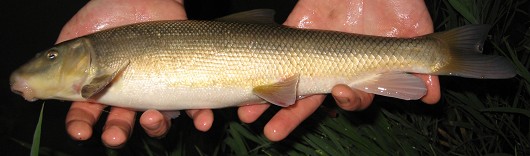
Sacramento Suckers have a diet made up of mostly algae, invertebrates, and detritus. The larval suckers feed on detritus and browse the bottom in warm protected streams, while juvenile fish forage along the bottom of stream banks of these warm streams. Young fish may stay in this warm water for several years before moving into lakes or larger rivers. Adult fish typically rest or hold in the deeper water during the day and feed during the first and last hours of the day. The larger fish may occupy pools, runs, or riffles in area where vegetation or rocks provide cover from birds and other predators. Their diet consists mostly of diatoms and detritus, with invertebrates playing a smaller role. The fish tend to grow larger and more rapidly in warmer streams and lakes as opposed to streams that are cool year round. At age 4-6 Sacramento suckers become sexually mature and begin a spawning ritual that may involve a migration to a warmer and smaller stream. Spawning is triggered by the onset of warmer water temperatures and usually occurs between February and June.
3. Sacramento Pikeminnow (Ptychocheilus grandis) NATIVE SPECIES
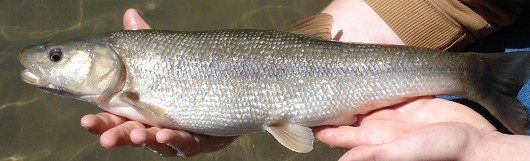
The Sacramento Pikeminnow has a lateral line that moves upward as it approaches the gill plate, which is about the only distinguishing feature separating it from the equally common, Sacramento Sucker.
- Big elongated fish, may exceed 1 m TL, maximum 115 cm (14.6 kg)
- Flattened head, large mouth, deeply forked tail
- Bigger adults dark brown to olive in coloration, gold-yellow underside
- Smaller fish, silver, dark spot at the base of the tail
- Spawning fish may develop orange-reddish hue on tail, males may develop nodes or breeding tubercles on head
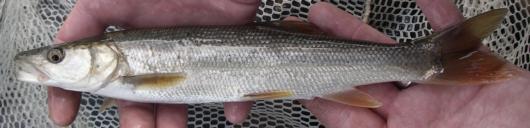
Note the size of the mouth, which is larger than that of a hardhead. Sacramento Pikeminnows, formerly known as “Squawfish”, grow and develop slowly but may reach great lengths, and ages in excess of 16 years. Younger fish feed and forage during the day, while adults tend to reside in deeper pools during the day and move into riffles to feed during dawn and dusk. Juveniles may feed on aquatic insects and change the focus of their diet to crustaceans and fish as they grow bigger. Large adults are voracious opportunistic predators and may take prey anywhere at anytime. In addition to fish, prey items may include: frogs, lamprey ammocoetes, large stoneflies, and even small rodents. At age 3-4, Sacramento pikeminnows become sexually mature and begin spawning in April – May.
4. Hardhead (Mylopharodon conocephalus) NATIVE SPECIES
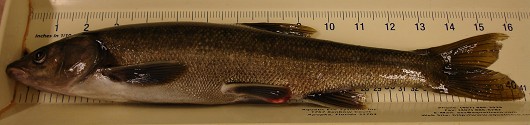
**State of California Department of Fish and Wildlife (CDFW) has the Hardhead (Mylopharodon concephalus) on their CDFW “Watch List”, so there is some concern about declining populations!
- Large minnows, sometimes greater than 60 cm, (rarely exceed 30 cm in smaller streams).
- Slightly deeper bodied than Sacramento pikeminnow
- Less pointed snout than Sacramento pikeminnow
- Maxilla doesn’t extend past front margin of eye, has frenum (bridge of skin) connecting upper lip to snout (Sacramento pikeminnow lacks a frenum)
- Coloration: brown or dusky bronze back, silvery sides
- Young fish silver in color
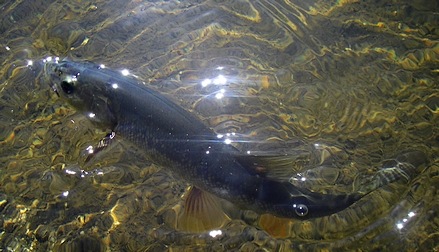
The Hardhead – nearly indistinguishable from the Pikeminnow except in the larger sizes, where it’s entire belly becomes an orange-yellow. (whereas the Pikeminnow belly remains white). Hardhead may also inhabit lakes or reservoirs. All ages are omnivores though the juvenile and adult fish have a slightly different diet and tooth structure for feeding. In general these fish will eat benthic invertebrates, aquatic plants and algae, or insects. The young fish typically feed on mayfly and caddisfly larvae, as well as small snails. Older fish may focus on plants, crayfish, and larger invertebrates. In a lake environment the fish may also feed on zooplankton. Within a stream hardhead tend to prefer warmer temperatures than salmonids and they are often found associated with Pikeminnows and Suckers. Adult hardhead may live up to 9 or 10 years.
The Western ridged mussel (Gonidea angulata) is a unique, long-lived freshwater bivalve (a Mussel) that depends on the Hardhead for its survival. The tiny Mussel larvae cling to the Hardhead’s fins or body (and the Mussels also use two other species of fish in the Pit 5 Reach), and that’s how these Mussels spread out and colonize. Since they can’t swim, they hitch a ride so they can grow and safely become young Mussels somewhere out there!
5. Tule Perch (Hysterocarpus traski) NATIVE SPECIES
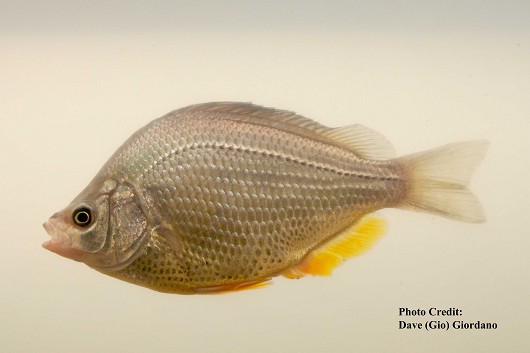
Tule Perch are very small little fish (10-15 cm or about 4-5 inches), and have a small terminal mouth, hump separates head from dorsal fin and a distinctive scale patch below dorsal fin. Within a river or stream Tule Perch tend to occupy deep pools that have complex cover in the form of aquatic and overhanging vegetation. They feed on invertebrates, plants, and zooplankton, mostly by swimming along the bottom of the stream. The perch may move into faster water for feeding by occupying small eddies and backwaters behind rocks and boulders.
The Western ridged mussel (Gonidea angulata) is a unique, long-lived freshwater bivalve (a Mussel) that depends on the Tule Perch for its survival. The tiny Mussel larvae cling to the Tule Perch (and also use two other species of fish in the Pit 5 Reach), and that’s how these Mussels spread out and colonize,. Since they can’t swim, they hitch a ride so they can grow and safely become young Mussels somewhere out there!
6. Pit Roach (California Roach) (Lavinia symmetricus) NATIVE SPECIES
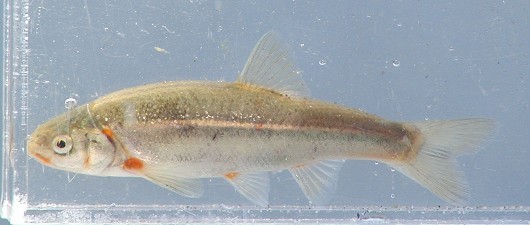
**State of California Department of Fish and Wildlife (CDFW) considers the Pit Roach (Lavinia symmetricus) to be a species of special concern”, so there is some concern about declining populations!
- Small chunky fish, usually less than 100 mm, rarely exceed 120 mm
- Large head, small downward turned mouth
- Coloration: body is usually gray to blue on top, silvery underside
- Spawning adults: may develop orange and red colorations on chin and paired fins.
7. Speckled Dace (Rhinichthys osculus) NATIVE SPECIES
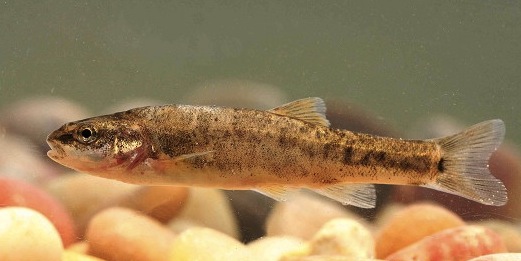
The speckled dace is about 4 to 5 inches (10 to 13 cm) long. During breeding, many males often accompany a single female who broadcasts adhesive eggs over the gravelly streambed. Each female produces between 200 and 500 eggs. Speckled dace are omnivorous, feeding upon filamentous algae and other plant material, bottom-dwelling aquatic insects and zooplankton.
8. Pit Sculpin (Cottus pitensis) NATIVE SPECIES
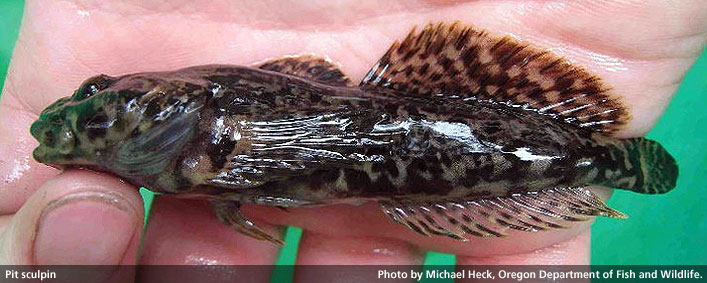
In general, sculpins are among the most difficult fish to identify. Individuals of the same species can vary dramatically, and features that are pronounced on some may be absent on others. Sculpins are also very elusive fish that blend well with their habitats. The pit sculpin grows to approximately five inches in length. Unlike most of the other freshwater sculpins native to California, the two top fins (dorsal fins) are not connected at the base. The pit sculpin has dark botches on its sides and back. Sculpins are unique fish that have very few or no scales on their bodies! Most species of sculpin are marine species. Of the seven freshwater species native to California, six occur in BLM-managed waters. Pit Sculpins are found in the Pit River drainage and the upper Sacramento drainage. Whereas most sculpins prefer slower waters with muddy, sandy, or gravelly bottoms, the Pit Sculpin prefers rocky riffles in fast-moving waters. They almost always stay near the bottom of the streams and rivers, spending their days hiding under objects and coming out only at night to feed on invertebrates.
During the breeding season the males build nests under large rocks by scooping out depressions in the sand or gravel. Females lay their eggs at the top of the nest, on the underside of the large rock. Females leave the nest as soon as the eggs are laid, and the nest is protected by the male until the eggs hatch. Multiple females may lay eggs in the same nest.
The Western ridged mussel (Gonidea angulata) is a unique, long-lived freshwater bivalve (a Mussel) that depends on the Pit Sculpin for its survival. The tiny Mussel larvae cling to the Pit Sculpin (and two other species of fish in the Pit 5 Reach) when they are very young, and that’s how they travel, spreading out to avoid crowding and colonizing in new terrain so they can grow and safely become young Mussels!
~~~~~~~~~~~~~~~~~~~~~~~~~~~~~~~~~~~~~~~~~~~~~~~~~~~~~~~
Aquatic Mollusks
The river Ahjoomah has several species of native Aquatic Mollusks (mussels and snails)…

NATIVE SPECIES The Western pearlshell mussel (Margaritifera falcata) has the broadest distribution and longest lifespan of the western U.S. freshwater mussel species. It’s found in small streams and large rivers that support salmonid populations from California to Alaska and inland to western Montana, Wyoming and Utah. Individuals have been recorded to live in excess of 100 years old and reach sizes up to about six inches long. Although die-offs and substantial declines have been reported in some drainages, in other locations this species can still be found in large, densely populated aggregations consisting of thousands of individuals. Mussels can greatly affect stream biodiversity by filtering water, recycling nutrients, providing food and habitat for aquatic invertebrates, and serving as an important food source for terrestrial and aquatic mammals.

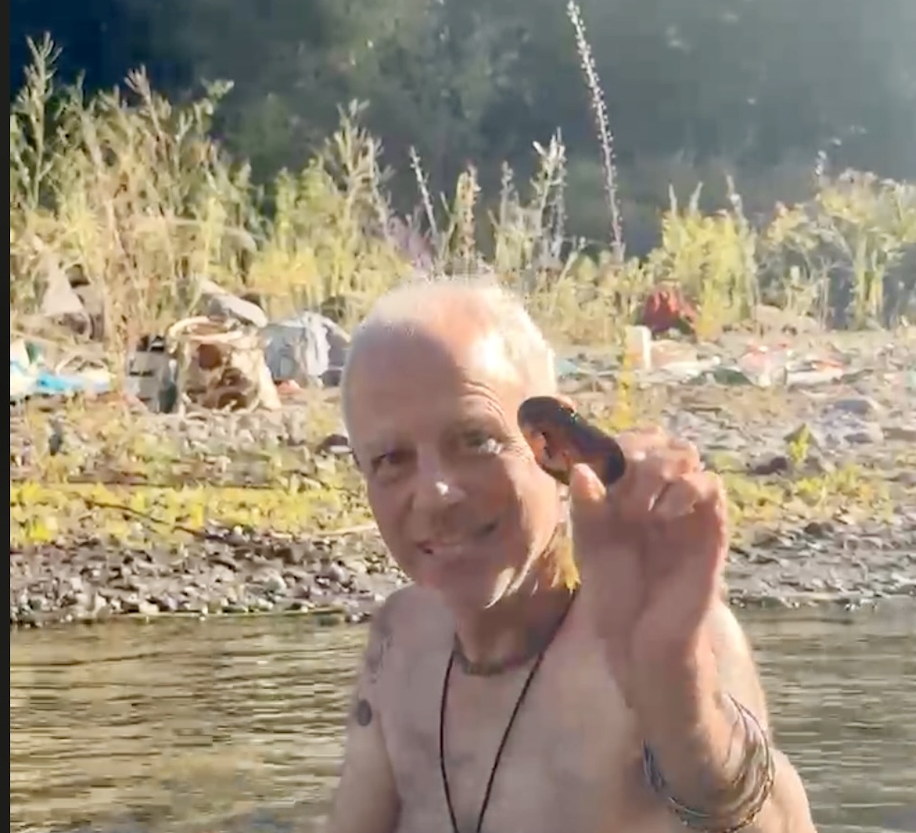
NATIVE SPECIES The Western ridged mussel (Gonidea angulata) is a unique, long-lived freshwater bivalve distinguished by a prominent, angular ridge on its shell. Native to cold, clean rivers and streams west of the Continental Divide, it is currently under consideration for federal protection due to significant habitat loss and severe population die-offs.
The Western ridged mussel is the only living species in its genus. It holds the following key biological and ecological characteristics:
- Appearance: Thick, trapezoidal to obovate shell reaching up to 5 inches in length. It features a sharp, raised ridge running from the hinge (umbo) to the bottom corner, which is visible even on worn shells.
- Habitat: Found in cold to moderate creeks, rivers, and sometimes lakes with stable bottoms of gravel, firm mud, sand, or clay. They require permanent water and are highly sensitive to being exposed to the air.
- Reproduction: This species requires specific fish hosts (such as the hardhead minnow, Pit sculpin, and Tule perch in California) for their larvae (glochidia) to survive and mature into juvenile mussels.
- Ecological Value: They are sedentary filterers that consume plankton and suspended organic matter, which directly improves local water quality and reduces turbidity.
- Conservation Status: Facing severe threats from drought, water abstraction, pollution, and climate change, the species has disappeared from about 43% of its historical range. It is currently monitored across its range—stretching from southern British Columbia through California, Idaho, and Nevada. You can track ongoing conservation initiatives via the U.S. Fish & Wildlife Service.
The Western ridged mussel (Gonidea angulata) is a unique, long-lived freshwater bivalve (a Mussel) that depends on the two native fish, the Hardhead and the Pit Sculpin for its survival. The tiny Mussel larvae cling to the Hardhead’s ot Pit Sculpin’s fins or body (and the Mussels also use two other species of fish in the Pit 5 Reach), and that’s how these Mussels spread out and colonize. Since they can’t swim, they hitch a ride so they can grow and safely become young Mussels somewhere out there!
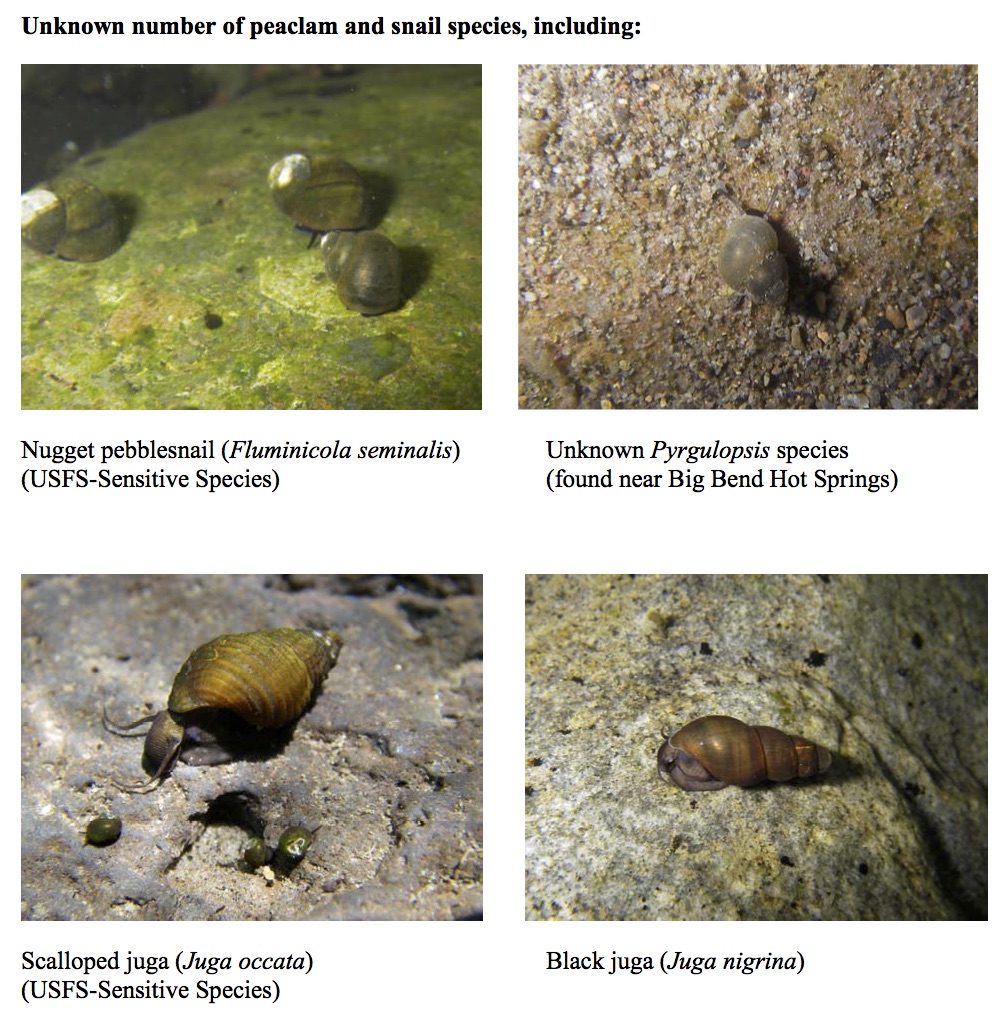
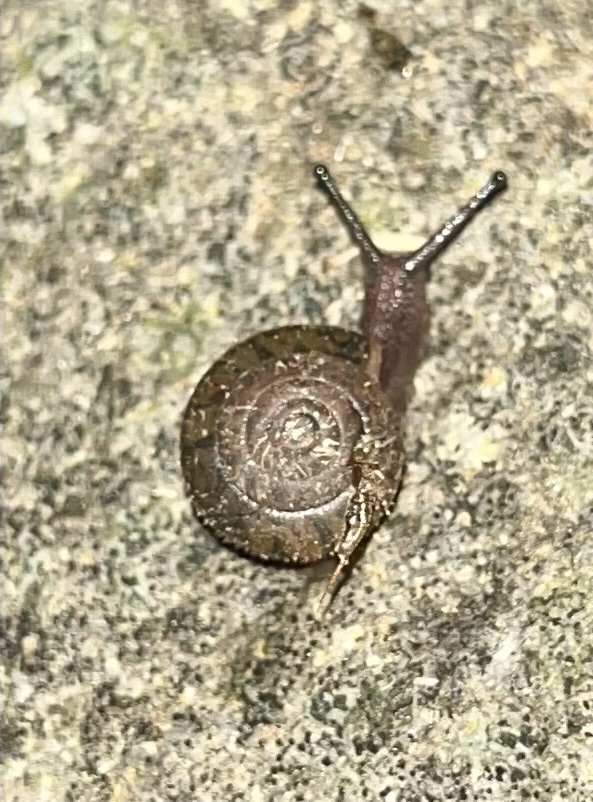
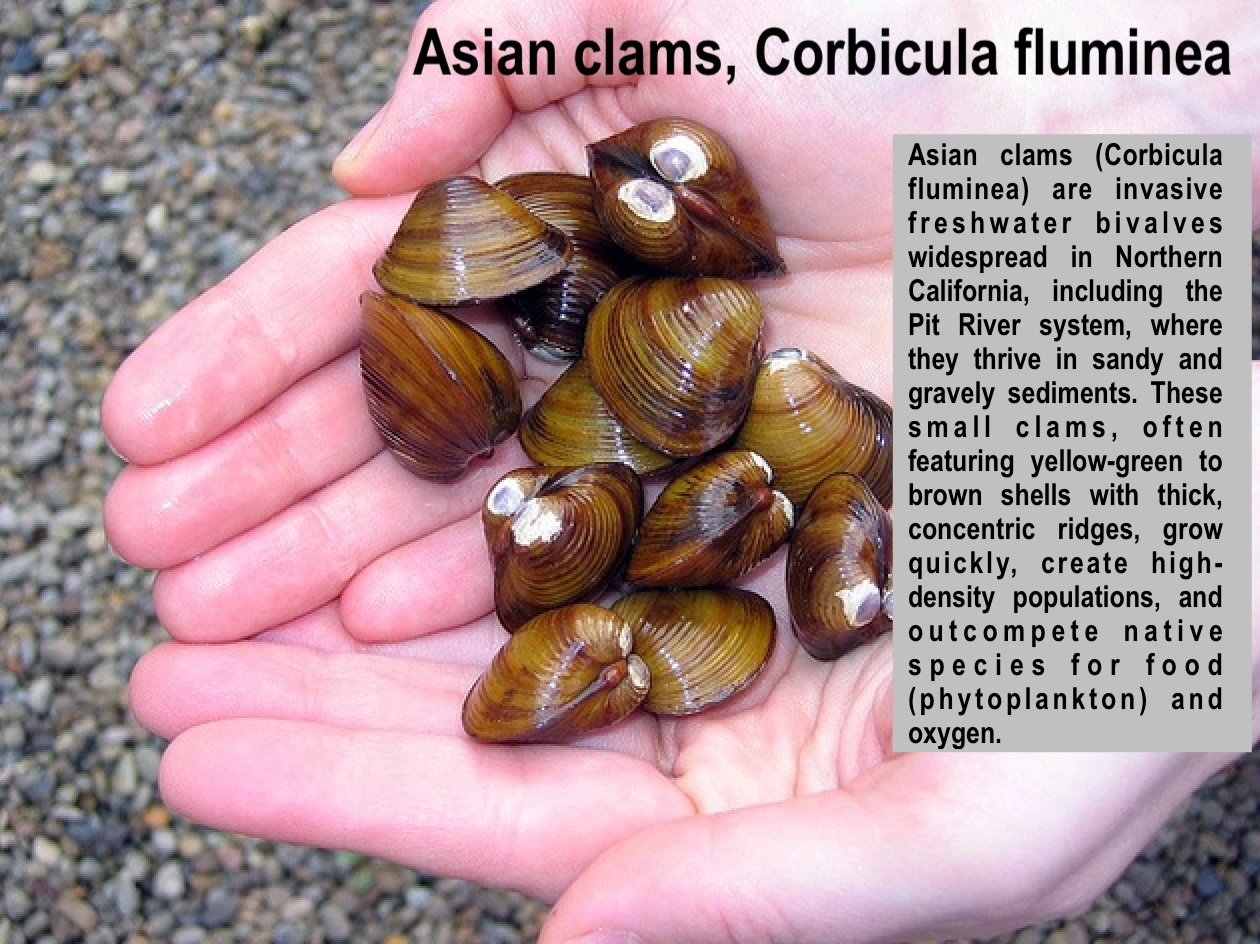
Coming soon to this page: Information and pictures of various other kinds of wildlife in the Pitt River Ahjoomah. We started with the fish education section, and then the aquatic mollusks, so next, we will get into some of the other favorite organisms that live in the River Ahjoomah such as Otters, Beavers, Minks, Aquatic Insects, Western Pond Turtles (see this evolving WPT post: http://www.bigbendhotsprings.org/western-pond-turtle/)
Ahjoomah River Aspects that Effect Aquatic Wildlife
River Flow Levels in the Pit 5 Reach:
UH-OH!!! Using the Pit 5 dam and a huge tunnel/pipe, PG&E tries to divert as much water as is legally allowed, to maximize electricity generation at the Pit 5 powerhouse, and thus maximize profits for shareholders. The power industry driven pre-relicensing minimum flows from the old FERC license before 2008 was set at an abominable horrible unacceptable 100/120 CFS. The new 2007 license dramatically increased the minimum flows starting in 2008— from the old highly inadequate 100 CFS baseline to the current 350–550 CFS range depending on season, representing a 3.5 to 5.5 times increase. Two weekends per summer, recreational releases bring the flows up to 1200-1600 CFS for a total of four days, while reducing the flow back down to 450 CFS, even at night on the “recreational release” weekends.
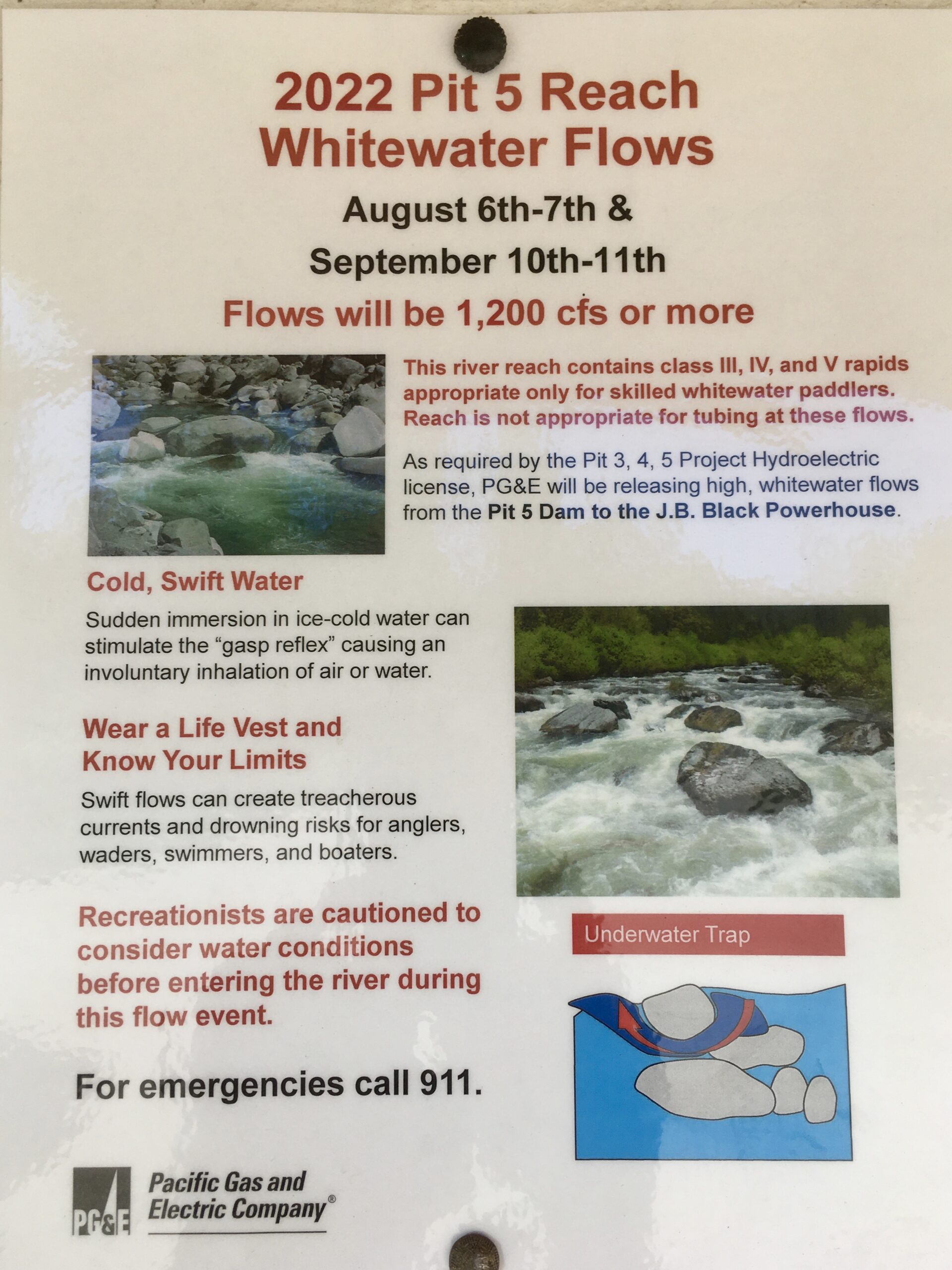
To put this in perspective, the average Pit River flow through the lower reach is about 3,000 CFS, and summer flows rarely fall below 2,000 CFS. The Pit 5 bypassed reach minimum of 350–450 CFS represents only a small fraction of the river’s natural flow — most of the water is diverted through PG&E’s tunnel to the Pit 5 powerhouse. This has been a point of ongoing controversy among environmental, angler, and whitewater recreation advocates who argue the minimum flows are insufficient to protect the aquatic ecosystem and recreational uses of the bypassed reach.
Pit 5 Reach — Official Minimum Instream Flow Requirements
(2007 FERC License)
The required minimum stream flows for the Pit 5 Reach, as certified by the California State Water Resources Control Board, are as follows:
| Season | Start Date | End Date | Required Minimum Flow |
|---|---|---|---|
| Summer | April 21 | August 31 | 400 cfs |
| Fall | September 1 | November 1–30 | 350 cfs |
| Winter (after spill) | November 1–April 20 | April 20 | 450 cfs |
| Winter (prior to spill) | December 1 | April 20 | 400 cfs |
| Winter Spill Cessation | March 16–June 15 | June 15 | 550 cfs for 14 days, then 500 cfs for 10 days, then 450 cfs for 10 days, then 400 cfs |
Some History:
The story of the Pit 5 minimum flow increase — from 100 CFS to 350–550 CFS — is essentially the story of American environmental law growing up. The original license was issued in an era of near-total hydropower primacy, no environmental statutes, primitive ecological science, and politically marginalized tribal and environmental interests. By the time relicensing occurred 50+ years later, every one of those conditions had reversed: powerful environmental laws gave agencies and tribes real leverage, sophisticated science documented the damage precisely, and a broad coalition of stakeholders used the PRCT process to negotiate an ecologically grounded flow regime that PG&E — facing the very real threat of license denial — ultimately agreed to accept.
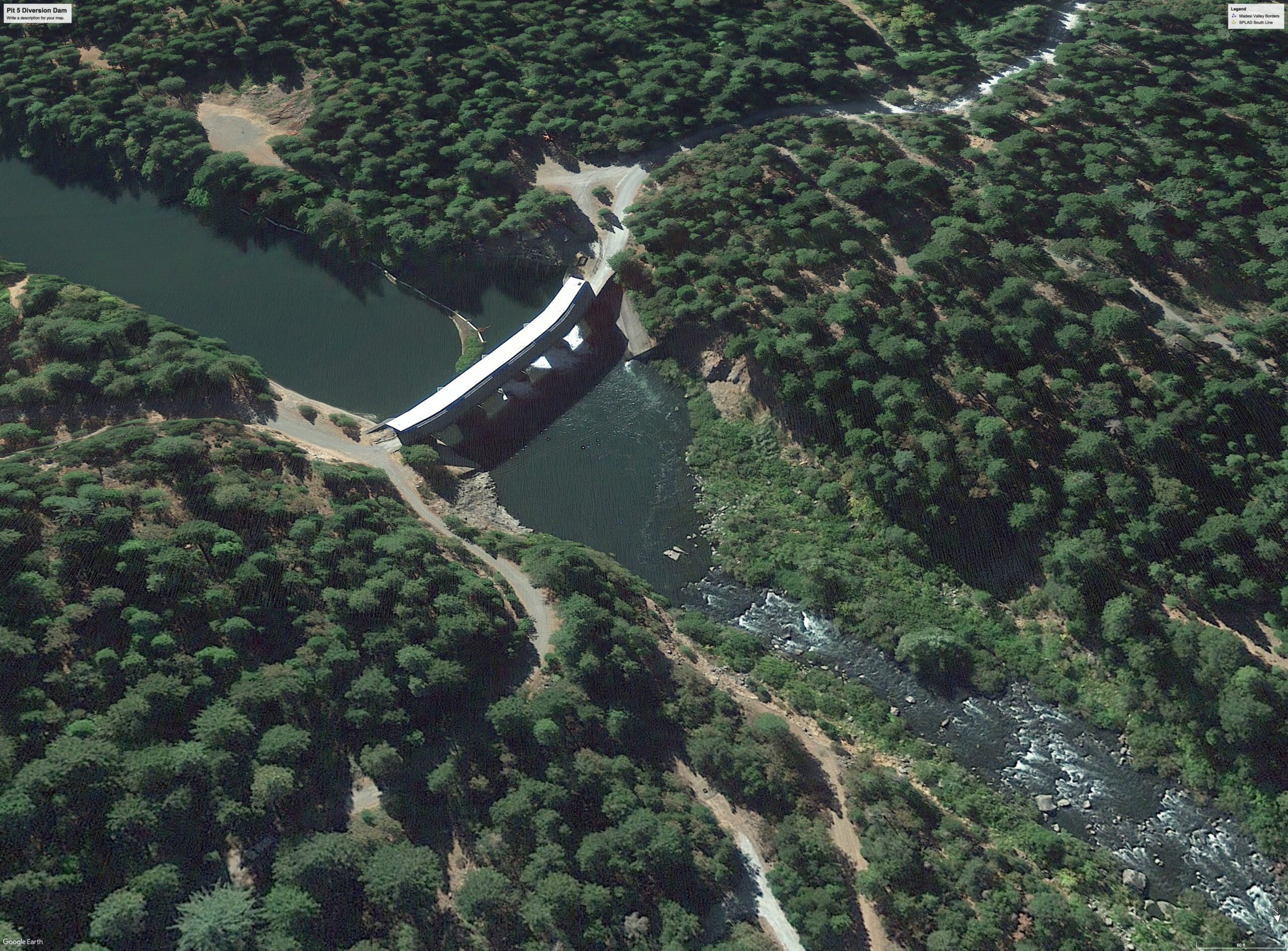
For the Pit 3, 4, and 5 Project, relicensing began with formation of the Pit River Collaborative Team (PRCT) in 1998, comprising PG&E, the Pit River Tribe, environmental organizations like California Trout, fisheries agencies, and recreation interests. This group negotiated a settlement agreement filed with FERC on October 31, 2003, outlining protection, mitigation, and enhancement measures, including minimum instream flows, fish habitat improvements, and whitewater boating releases to address ecological alterations from peaking operations.
~~~~~~~~~~~~~~~~~~~~~~~~~~~~~~~~~~~~~~~
List of Fish found in Big Bend section of Ahjooma:
NATIVE SPECIES:
Petromyzonidae
Pit Brook Lamprey (Lampetra lethophaga)
Salmonidae
Redband/Rainbow Trout (Onchorhynchus mykiss)
Cyprinidae
Sacramento Pikeminnow (Ptychocheilus grandis)
Hardhead (Mylopharodon conocephalus)
Tui Chub (Siphateles thalassinus)
Speckled Dace (Rhinichthys osculus)
Pit Roach (Lavinia symmetricus)
Catostomidae
Sacramento sucker (Catostomus occidentalis)
Cottidae
Pit Sculpin (Cottus pitensis)
Embiotocidae
Tule Perch (Hysterocarpus traski)
INTRODUCED SPECIES:
Salmonidae
Brown Trout (introduced) (Salmo trutta)
Cyprinidae
Golden Shiner (introduced) (Notemigonus chrysoleucas)
Ictaluridae
Channel Catfish (introduced) (Ictalurus punctatus)
Brown Bullhead (introduced) (Ameiurus nebulosus)
Centrarchidae
Sacramento Perch (introduced) (Archoplites interruptus)
Largemouth Bass (introduced) (Micropterus salmoides)
Green Sunfish (introduced) (Lepomis cyanellus)
Bluegill (introduced) (Lepomis macrochirus)
~~~~~~~~~~~~~~~~~~~~~~~~~~~~~~~~~~~~~~~~~~~
? Smallmouth Bass (Micropterus dolomieu) ?