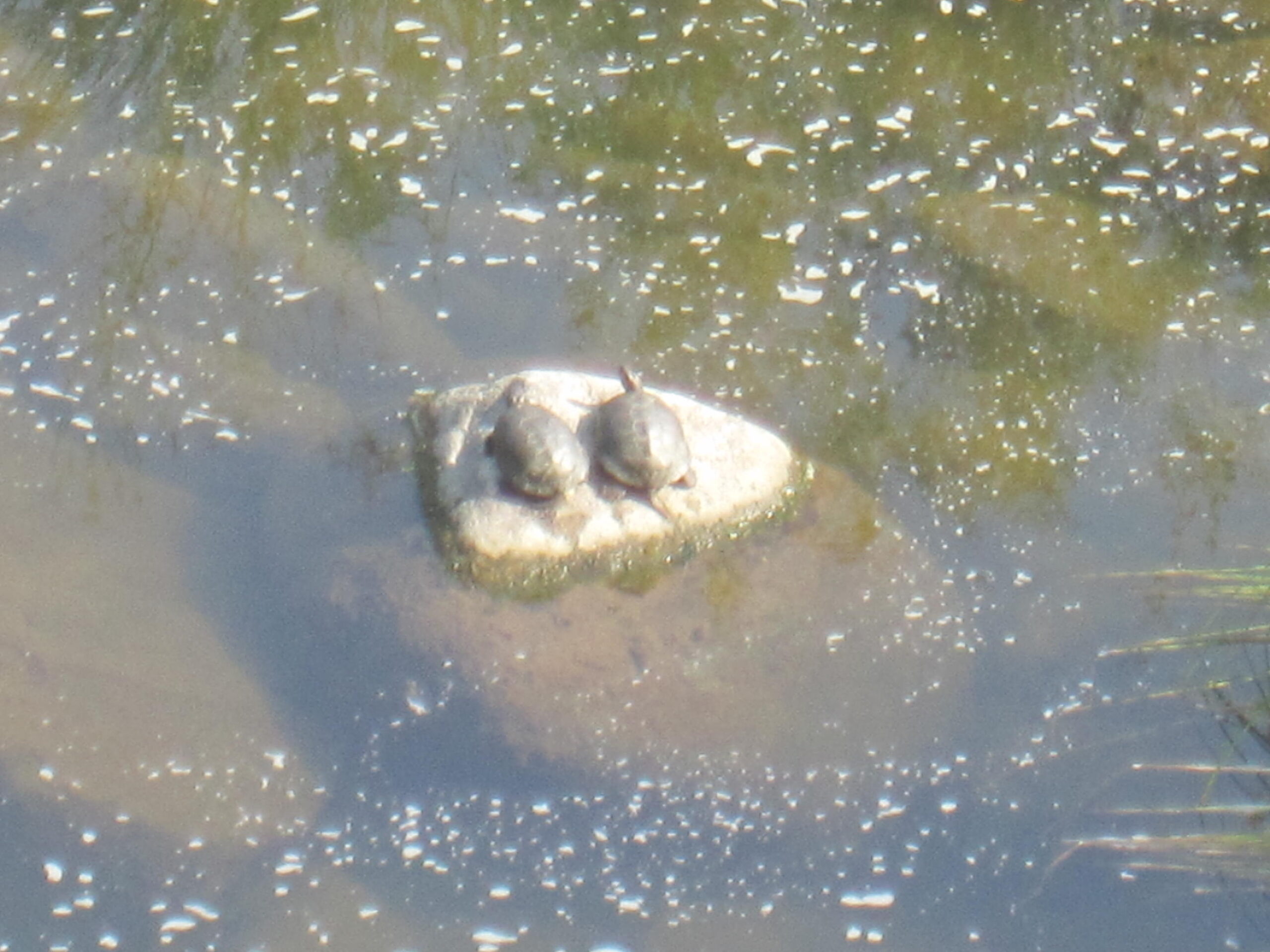
The western pond turtle is California’s only native freshwater turtle, featuring a 4-to-9-inch olive or brown shell, a yellowish belly, and dark head markings. They live in slow-moving streams, ponds, and marshes and often come out of the water to bask in the sunlight. Sadly, their numbers have been declining and they are classified as a California species of special concern! **All photos on this web page are local from Big Bend, except for the beautiful picture of the three basking WPTs directly below, plus two other photos... Can you guess the other two borrowed images?

Big Bend and the amazing Pit River Ahjoomah is prime habitat for the beautiful and important Western Pond Turtle (Actinemys marmora) (aka, Clemmys marmorata). These fascinating turtles are apparently successfully breeding around here, despite the hazards of the turtle life these days. Turtles are declining in general because of loss of nesting habitat, loss of hatchling habitat, disease carried in by non-native invader turtles, predation on hatchlings, and loss of basking spots. Turtles thermoregulate by basking in the sun on a warm rock in the river or on the bank, so it’s a very important part of their habitat and needs. They are amazing and beautiful creatures.

Finding turtles of various ages (young, middle age, and older) gives us confidence that the local population of WPTs is doing well, with this apparently healthy multigenerational reproductive success in the Pit 5 Reach.
Threatened & Endangered: The Western Pond Turtle, including its northern and southern variants, is highly imperiled, with the U.S. Fish and Wildlife Service (USFWS) proposing to list it as threatened under the Endangered Species Act. It is recognized as endangered in Washington, sensitive-critical in Oregon, and a species of special concern in California.
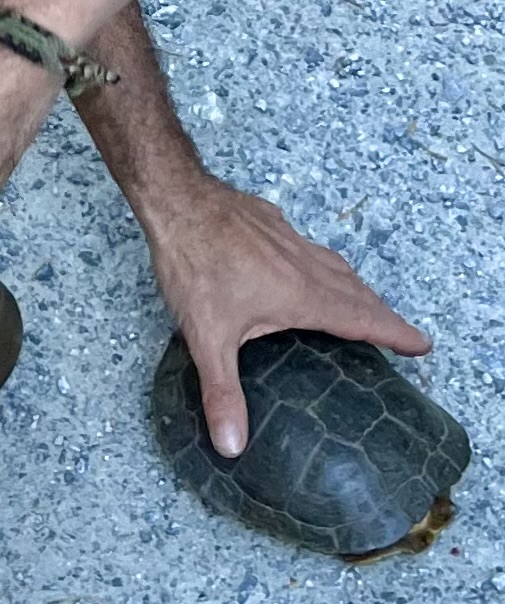
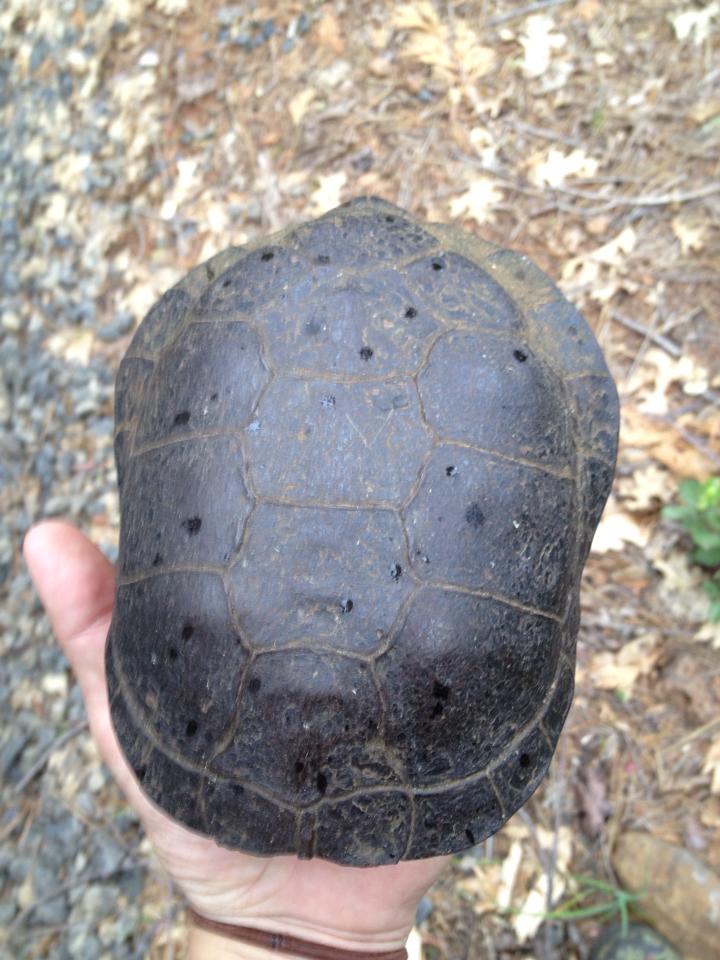
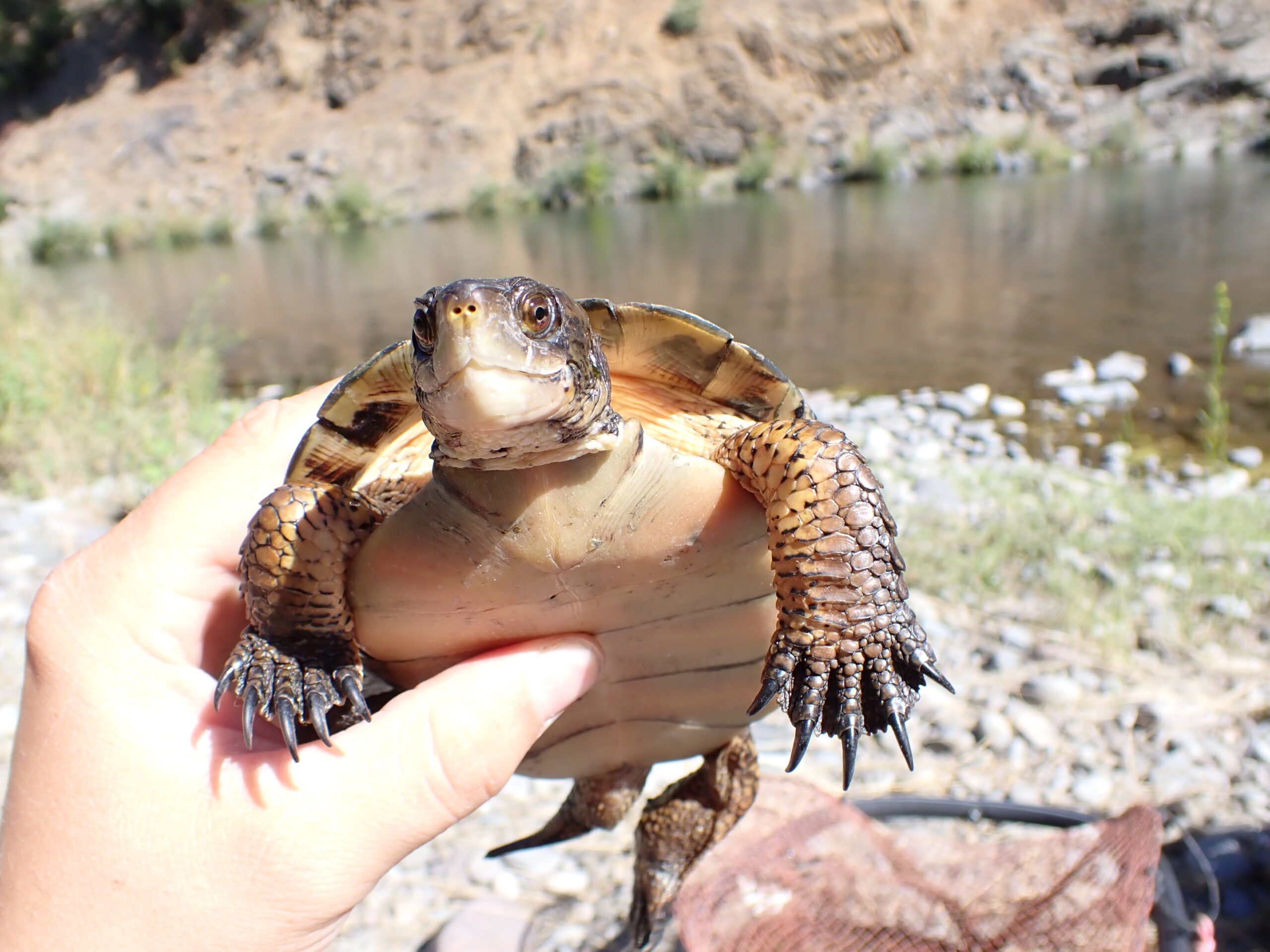
Identifying the WPT: The coloration of the western pond turtle ranges from brown to black on the carapace (the upper shell), with lighter marbling visible close up. The plastron (the lower shell) is black and yellow. The head and legs are dark with possible yellow markings (but not stripes like the painted turtle). Adult pond turtles range from 15-20 cm (6-8 inches) in length and weigh 448-1100 g (1-2.4 pounds).

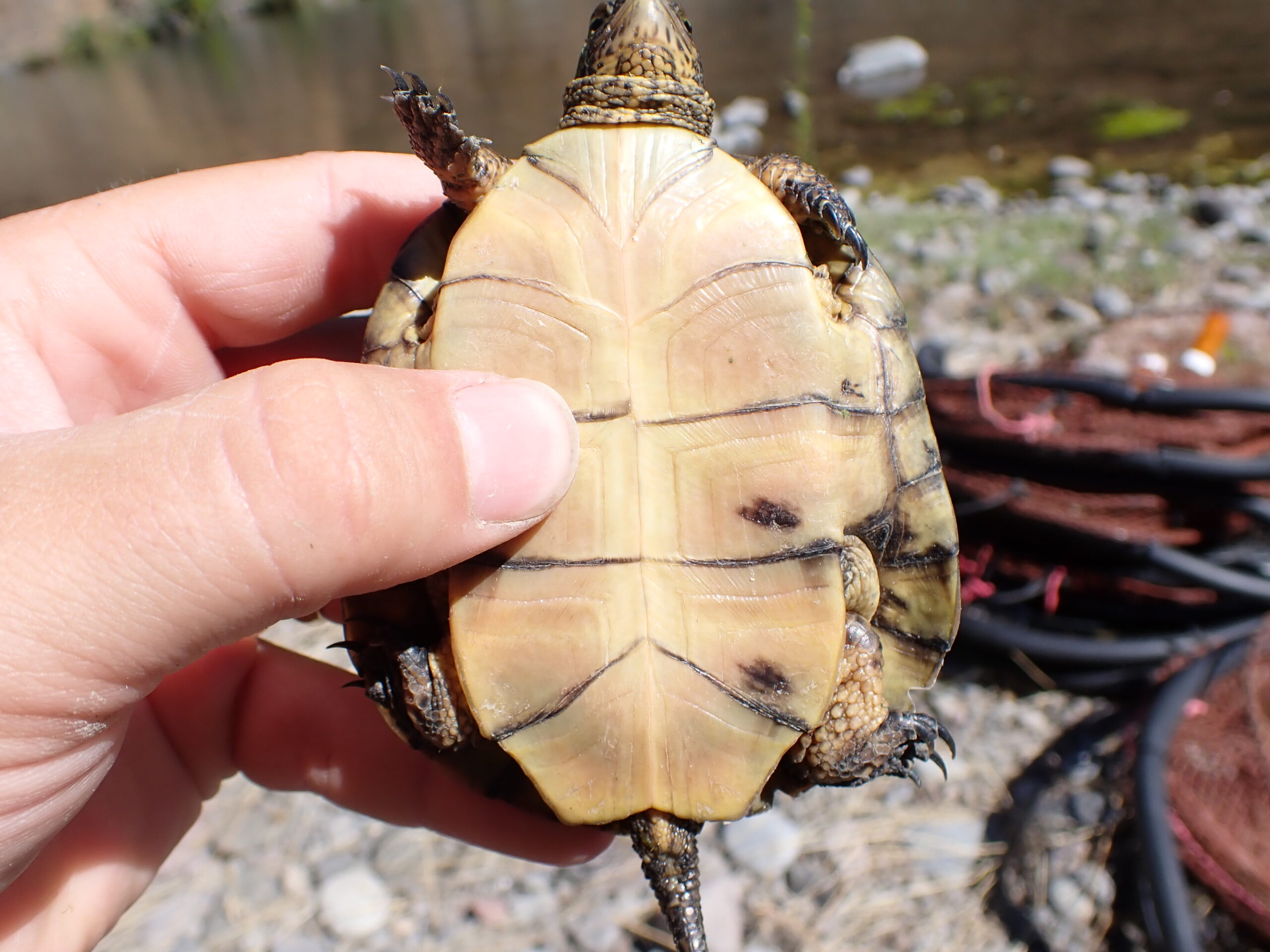
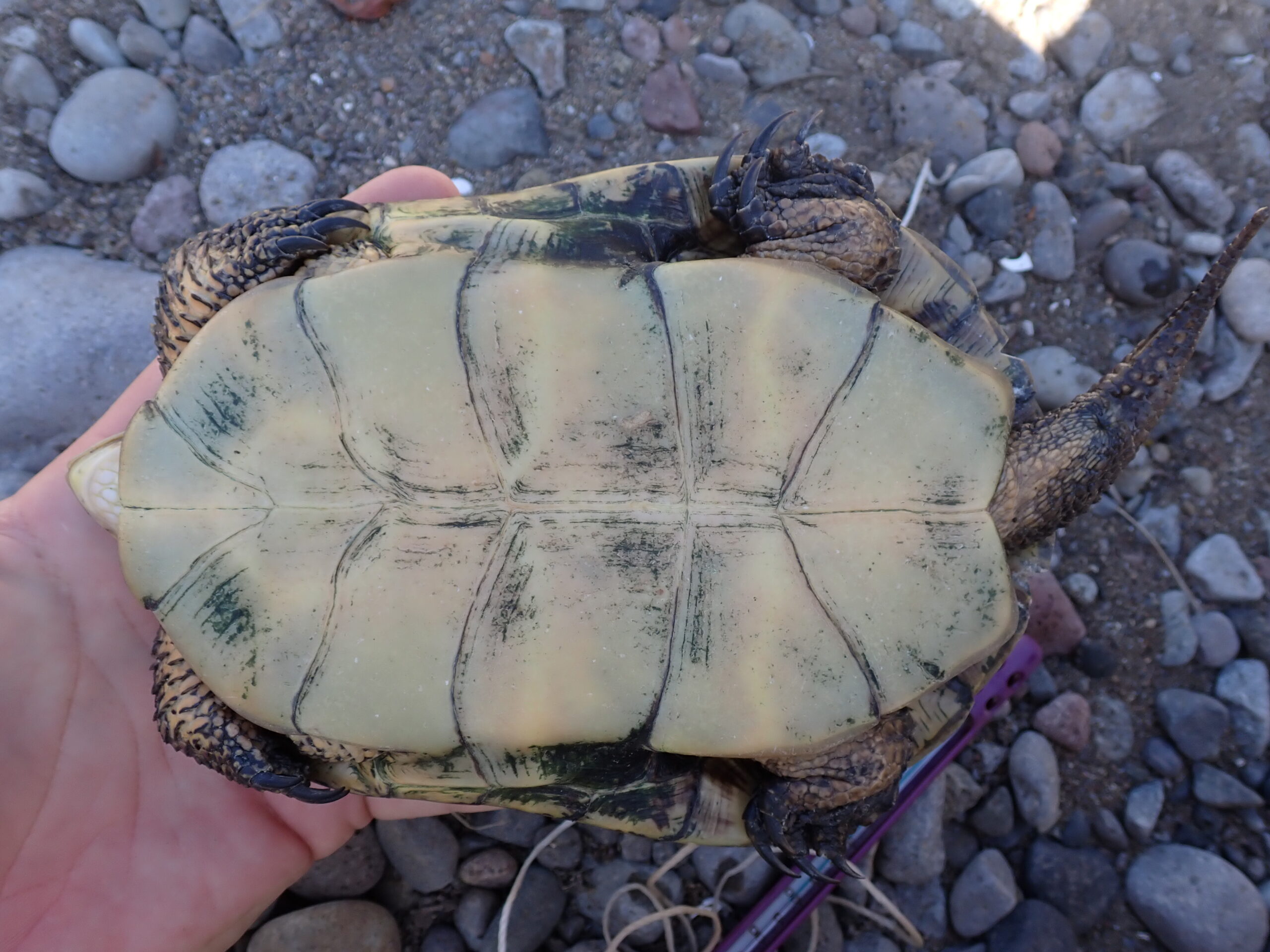
The sex of a WPT is best distinguished by their shell shape, tail size, and throat coloration. Males have flatter shells (and less marked than a female’s). And males have a concaved underbelly and long/thick tails (much longer than that of female), and light-colored throats. Females have higher, dome-shaped shells, shorter/thinner tails, and dark, speckled throats. The males’ cloaca extends past the end of shell, whereas the cloaca of female does not extend past end of shell. *A cloaca is a single, multipurpose opening at the base of a turtle’s tail. It acts as the shared exit and entry point for three different biological systems: the digestive tract (feces), the urinary tract (urine), and the reproductive tract (laying eggs or passing sperm).

Life Span & Range: The western pond turtle, also known commonly as the Pacific pond turtle, is a species of small to medium-sized turtle in the family Emydidae. The western pond turtle typically lives for 40 to 70 years in the wild, so they can be found in many sizes and ages, as they can live so long. Its native range stretches along the Pacific Coast of North America, extending from the Puget Sound region in Washington state, through Oregon and California, and down into Baja California, Mexico. The WPT is threatened or endangered in some northern parts of its range.
Struggling for Survival: Turtle populations are declining, especially because of loss of nesting habitat, loss of hatchling habitat and predation on hatchlings. In the early 20th century, commercial trapping for food and pets also reduced turtle populations. Habitat loss from wetland draining, urban development, hydroelectric dams, and intensive agriculture has led to reduced distribution and numbers of turtles. The spread of exotic plant species such as Himalayan blackberry and Reed canary grass, plus fewer floods and more fires have reduced the quality and quantity of turtle habitat. Introduction of turtle-eating exotic predators such as bullfrogs, opossums and largemouth bass has also reduced turtle populations.
Damn Hazard: The “reach” part of the river is the part in between the diversion dam upriver and the power house generator down river, which is therefore the river section where much less river water is allowed to flow, as it’s diverted to make & sell electricity. Normally in the Pit 5 Reach, most of the water is diverted into holding bodies, which include first the Pit 5 Diversion Reservoir (above the Pit 5 Dam) and then down a short tunnel pipe to Tunnel Reservoir, which is a relatively small human-made reservoir pond. Tunnel Reservoir holds the diverted Pit River Ahjoomah river water until it is sent down the longer 13′ diameter tunnel pipe, down to the Pit 5 Powerhouse. That reduces the flows in the Pit 5 Reach (section of river in between the dam and the powerhouse). *For more information about the heavily dammed Pit River Ahjoomah please see this BBHSP article post about the local hydropower situation in and above & below Big Bend: Damn! …Those Dams. You know you want to.
Minor Improvement in the Habitat Loss Situation:
In the last two decades, in order to get their old 35-year-long expiring, scandalous, naive, misguided, and insensitive-to-wildlife hydroelectric system operation permit renewed (a permit that originally ignored the needs of future generations, native tribes, local and downriver people, and healthy ecosystems…), PG&E had to work with all the agencies and stakeholders that mostly did not exist back in the late 1960s when they were working on their last permit renewal. These stakeholders finally had a seat at the table for the permit-renewal process for the massive diversion dam (Pit 5 Dam) and hydroelectric operation (Pit 5 Powerhouse), etc. The huge PG&E utility company eventually had to give up a little tiny bit of profit for shareholders and overpaid executives by diverting a tiny bit less water.
But, the area between the Pit 5 Dam and the Powerhouse (known as the Pit 5 Reach) is an amazing near-pristine habitat zone for many unique and important organisms, and it still has a small fraction of the water flows that it naturally had before the dam was finished in 1943. The turtles are directly threatened by this system, while the Salmon runs have already long-since been destroyed (extinct from this habitat)…

For the renewed new Pit 3, 4, & 5 FERC (Federal Energy Regulatory Commission) licensing permit, PG&E has been more recently required (because of the improved permit renewal processes and more laws protecting habitat) to keep the water level in the Pit Five Reach at higher minimum (but still pathetically low) levels than previously required. For about 65 years, inadequate environmental protection laws and corporate greed allowed PG&E to put profits above the natural world to the extreme, by allowing the huge utility company to divert way too much water, leaving the river ecosystem in the Pit 5 Reach short-changed every day for all those decades during the recent era since the dam was built (1943 until 2008). Hopefully some day new legislation will require PG&E to open the floodgates and stop diverting so much waster. We can make way more power with less costly and less destructive than damming up rivers!
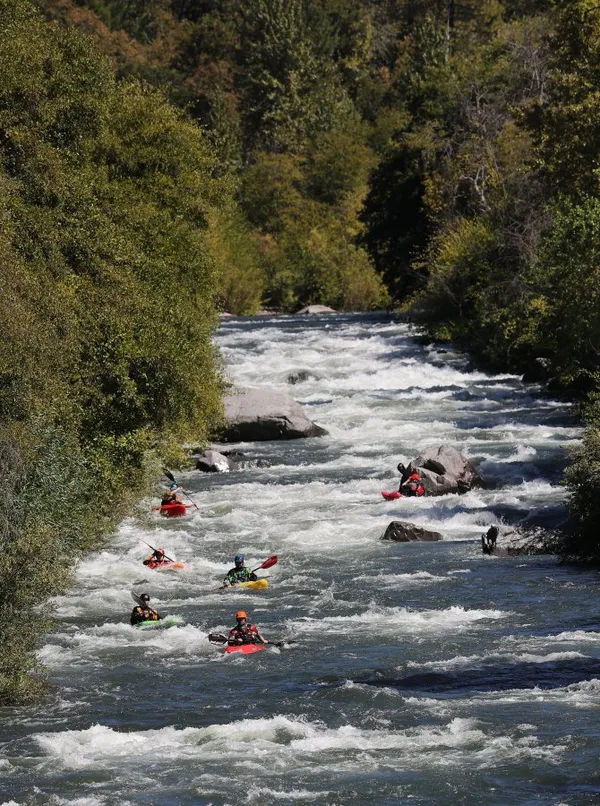
River Health Increases: But for now, PG&E still diverts too much water and the river is generally higher, which can be dangerous for unsuspecting tubers who grew up navigating the mighty Pit River Ahjoomah. The river is a different animal to ride since they raised the level in 2008! Fortunately, the newer hydroelectric dam permit requires them to leave more water in the river (on its natural flow down the river instead of down their tunnels) creating healthier habitat, plus recreational benefits for hikers, swimmers, boaters, and anglers.
The minimum flows are now set at around 450 cubic feet per second (CFS). Since that change (2008), the Western Pond Turtle and thousands of other organisms around them are apparently increasing their populations and general health and success, as the river habitat health increases when more water stays in the river! Water is life. Ongoing field surveys and sampling will continue to show if conservation efforts make a difference. There is still a massive amount of diverted water, but the new higher minimum flows seem to be helping all the amazing animals and plants in the Pit 5 Reach!

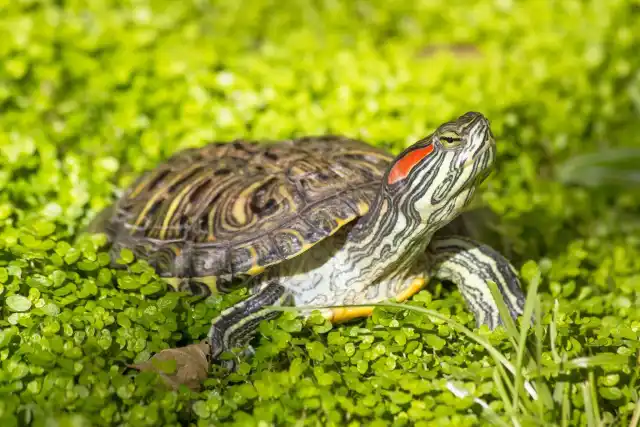
Turtle DANGER: There is a non-native invasive turtle (shown below) called the Red-eared Slider (Trachemys scripta elegans), which is a terrapin native to southern USA and northern Mexico. It is popular as a pet across the world, the most commonly traded chelonian (turtles, tortoises, and terrapins), and the most invasive chelonian in the world. Red-eared Sliders can and have invaded the Western Pond Turtle’s habitat here in the Pit 5 Reach in Big Bend, and they will compete for basking space, which is essential to turtles’ survival and health. But even worse, they can introduce diseases the the local WPTs have no immunity to. The invasive southerners also compete with the WPTs for resources including food and thermal rainbow sunglasses… Red-eared Sliders, please stay away!
WPT Diet: Western pond turtles are opportunistic omnivores that feed primarily in the water. Here is what they mostly eat:
•Prey: Aquatic insects, beetles, dragonfly nymphs, crayfish, snails, and tadpoles.
•Carrion: Dead fish, amphibians, or other decaying organic matter
•Plants: Filamentous algae, lily pads, tules, and tender aquatic roots.
•Hunting technique: They forage along bottom substrates and vegetation beds, using their sharp eyesight and sense of smell to locate food.

Crucial Basking Habits: Basking is a critical daily behavior that regulates body temperature and aids digestion. Turtles need adequate basking to survive!
•Preferred locations: Large logs, fallen trees, rocks, mudbanks, and mats of floating vegetation.
•Thermoregulation: They spend hours under direct sunlight to elevate their body temperature, which accelerates their metabolism and food processing.
•Shell health: Sun exposure dries out the shell, which helps shed old scutes and prevents fungal or bacterial infections.
•Wary behavior: They are highly sensitive to movement and sound; they will quickly plunge into deep water at the slightest sign of a threat.
Western Pond Turtle Life Cycle: The WPTs grow very slowly, often taking 10 to 15 years to reach sexual maturity. They are a long-lived but slowly reproducing species. Females lay clutches of 3 to 13 eggs in upland nests, which hatch in late spring. Once the nesting site is prepared, she deposits her clutch into the hole. After laying the eggs, the hole is filled with a mixture of vegetation and dirt to provide an air space, then covered with wet soil to keep the eggs in a humid environment. This slow process can take anywhere from two to four hours. The eggs incubate naturally underground for 90-130 days, depending on summer temperatures.
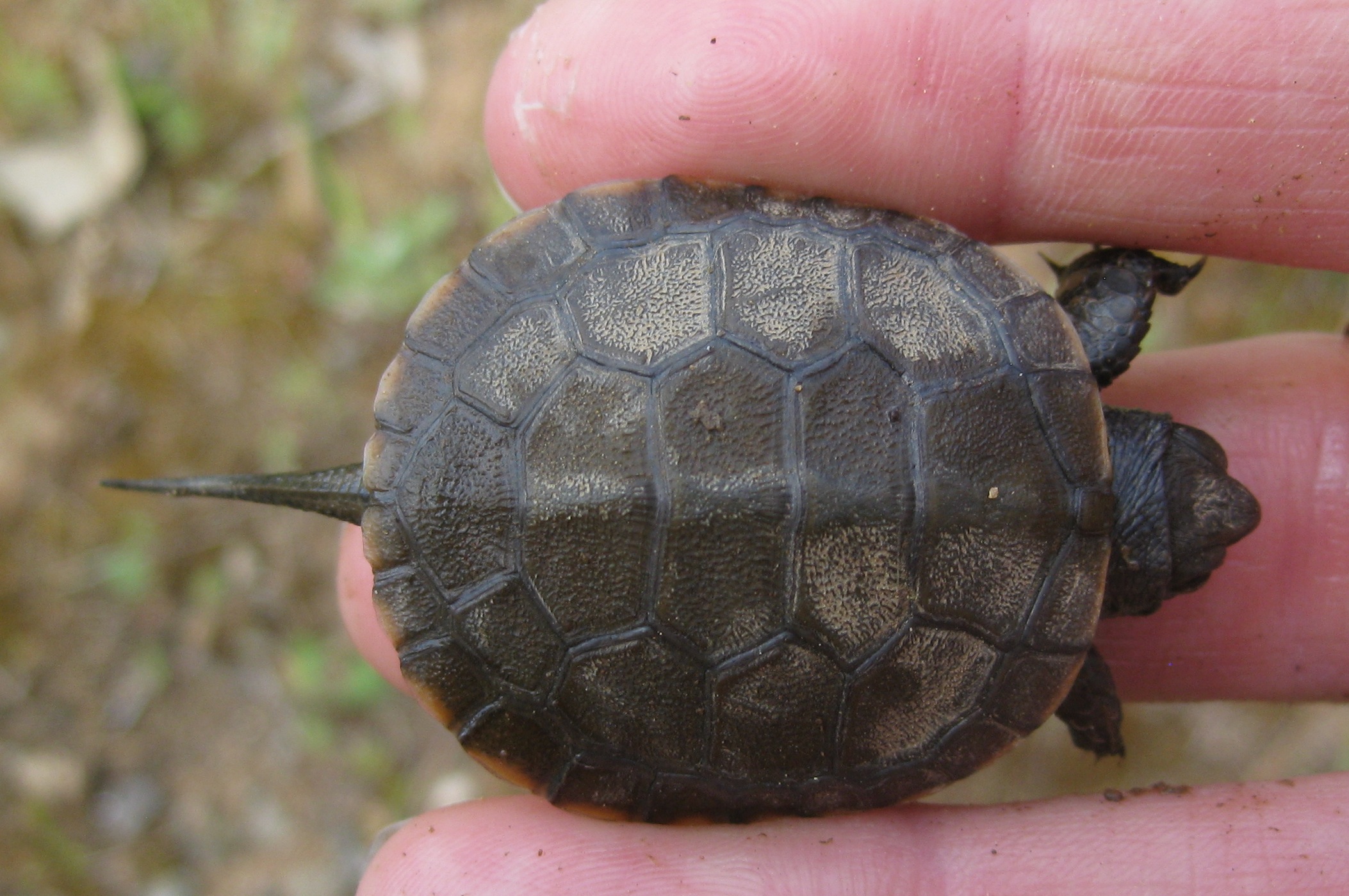
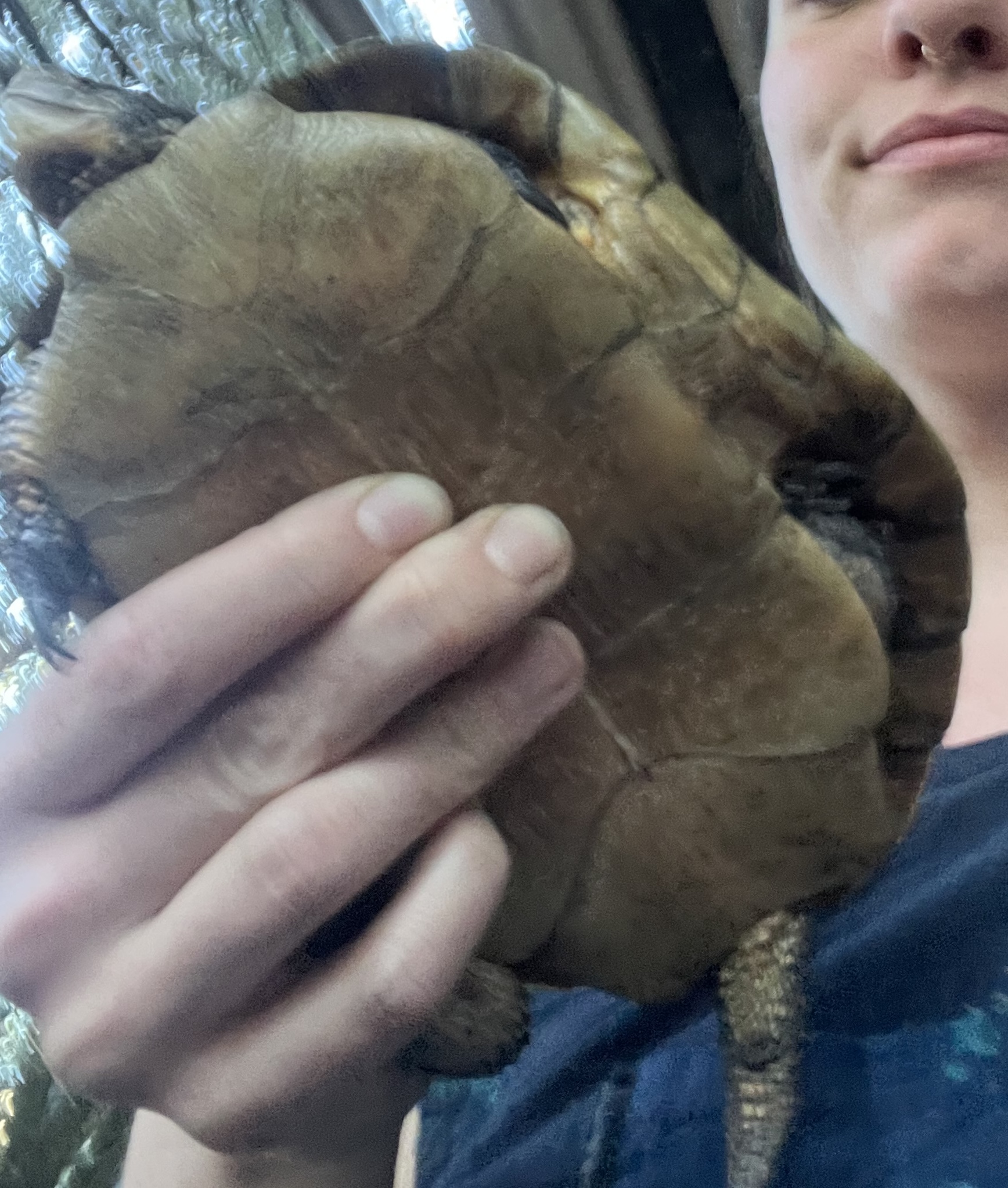
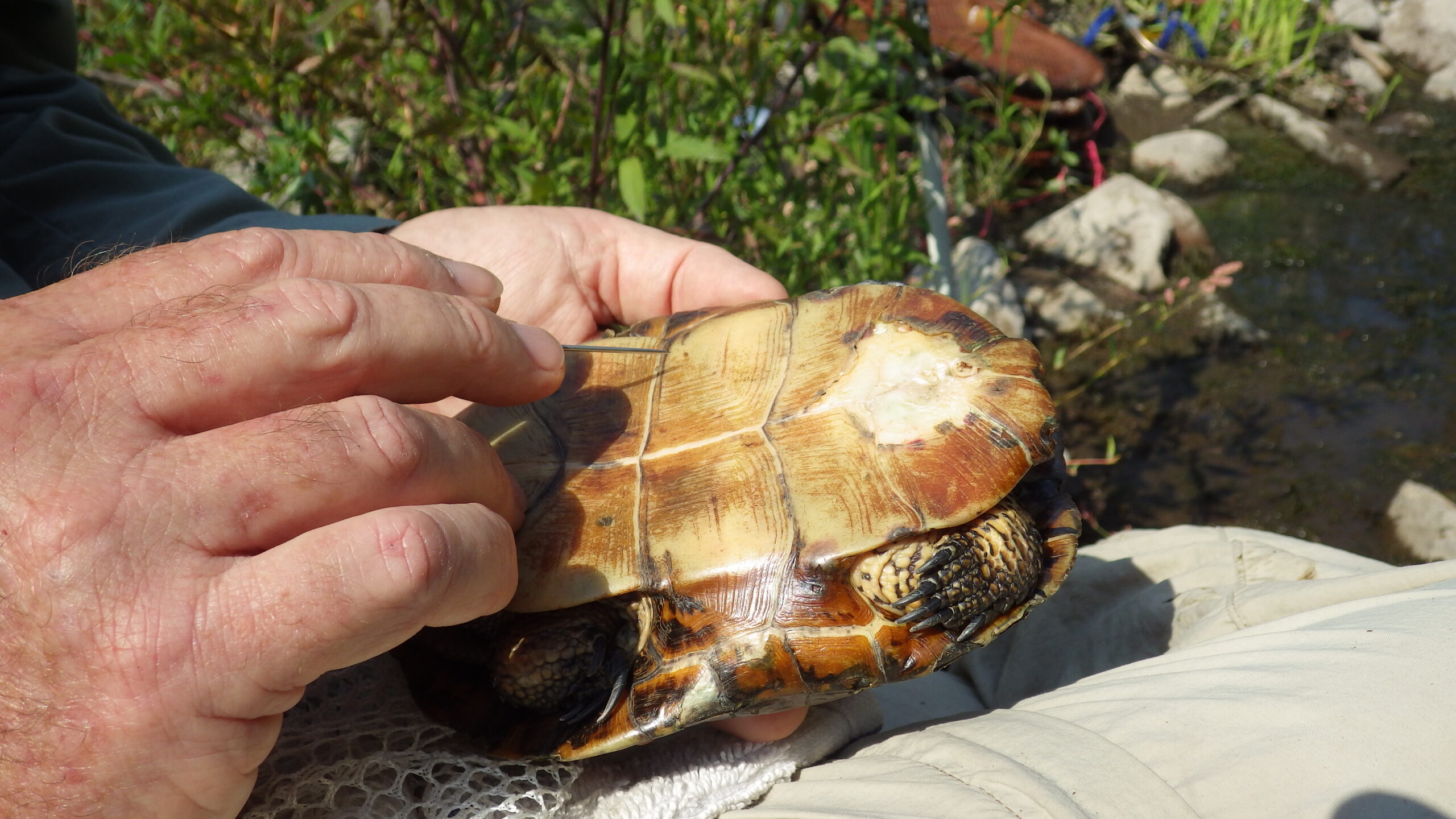
August 2026 Field Survey Update: Katie and her team of biologists from Spring Rivers Ecological Sciences reported the following: From one night of trapping at the Big Bend Hot Springs property, we caught four turtles (two males and two females). None of them were recaptures, but we were able to mark and release the ones we did catch. They were all estimated to be 15+ to 20+ years old based on the growth lines and the amount of wearing on their abdominal scutes. Here are four pictures from the short field study:

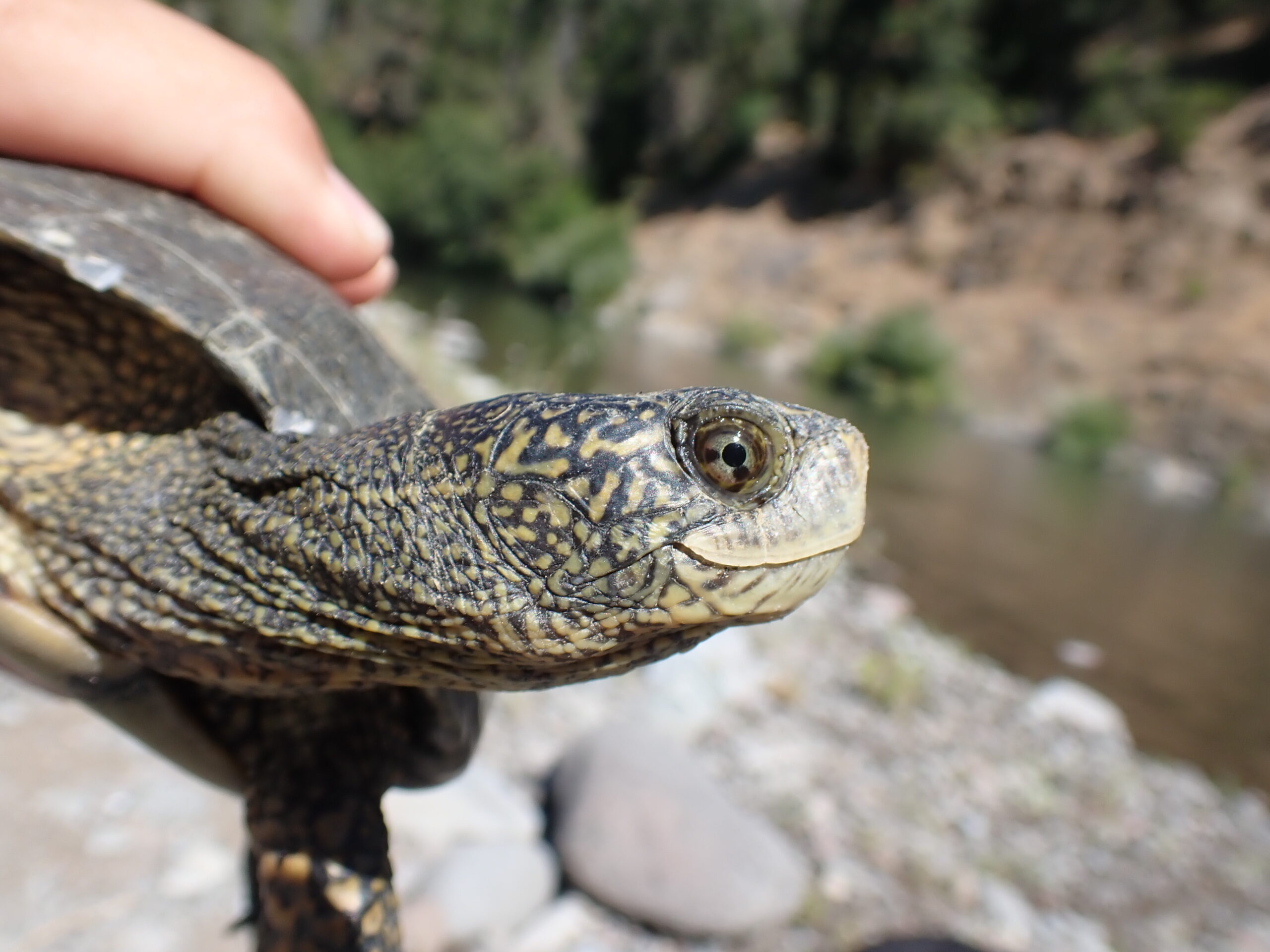
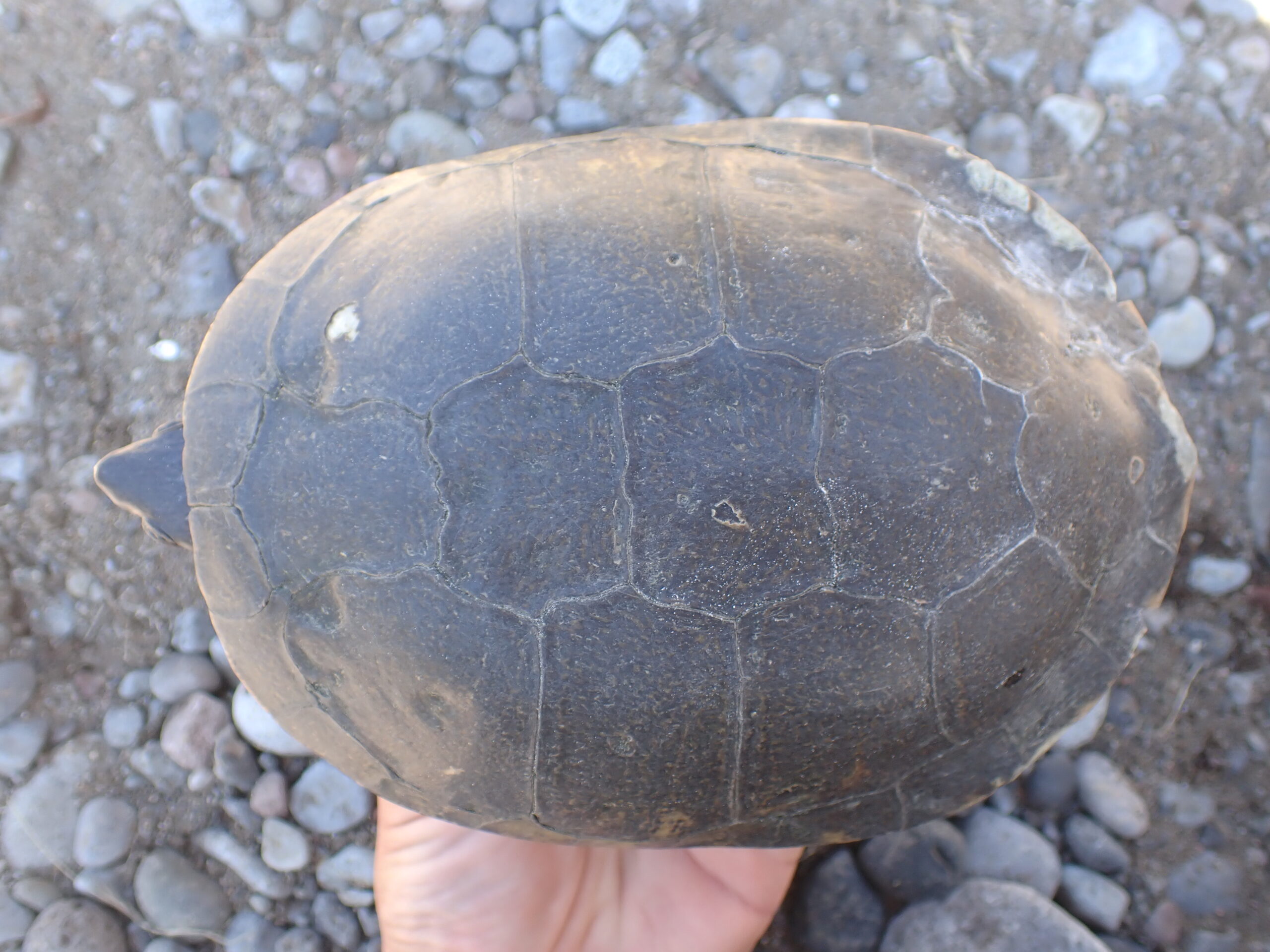
Populations of western pond turtles are in decline due mostly to: disease, upland and aquatic habitat alterations and destruction, in addition to the introduction of predators. The biggest threat to the species is the bullfrog and introduced warm fresh water fish, such as bass. Both prey on small juvenile turtles. The western pond turtle (Clemmys marmorata) is listed by Washington State as an endangered species. The species is not listed under the federal Endangered Species Act.

*You can learn more about WPT local conservation status and recovery efforts from the U.S. Fish & Wildlife Service. (link)